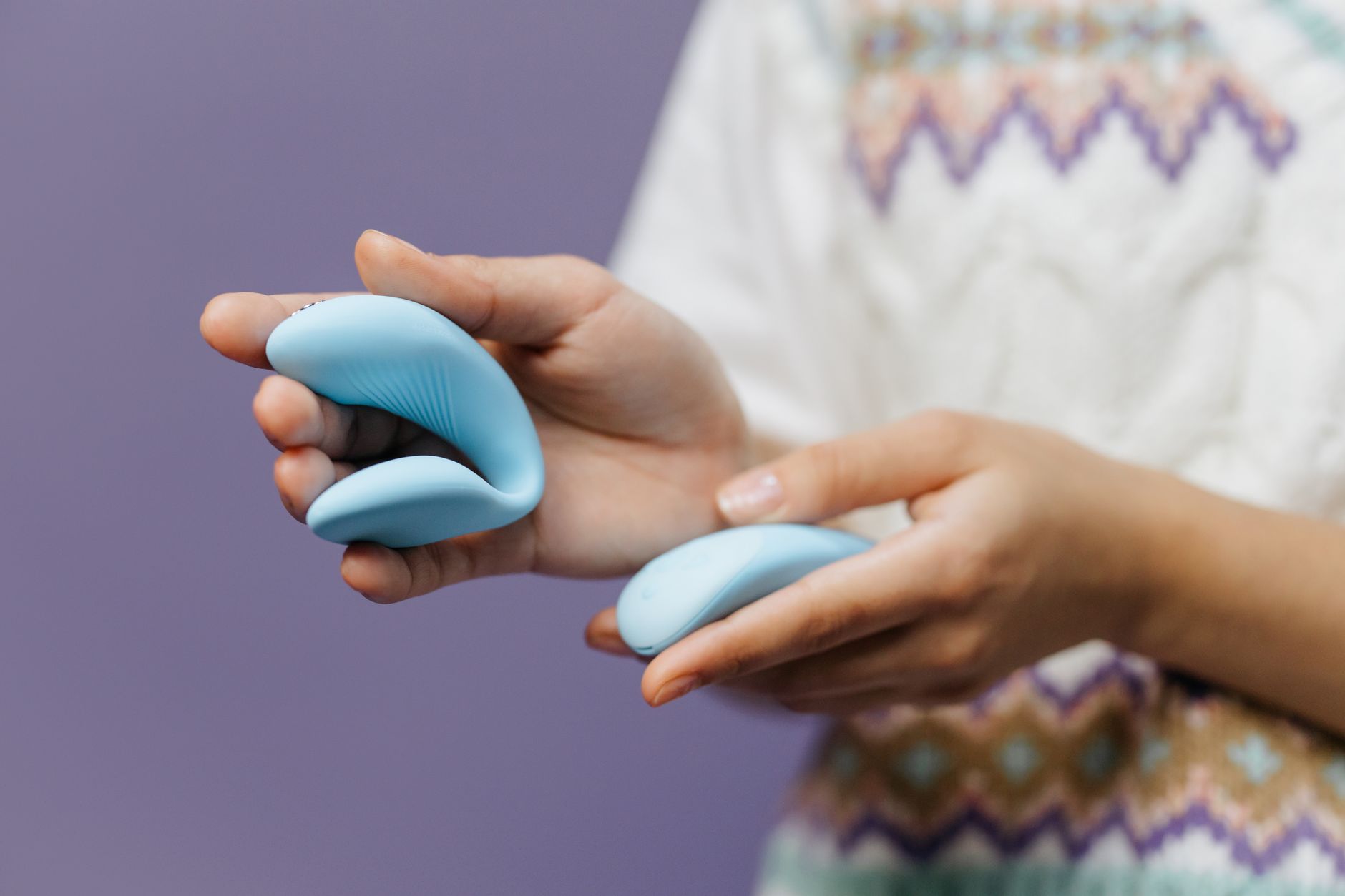
Let's talk about the thing couples don't say out loud
Most relationships hit a point where one person is curious about sex toys and the other person isn't sure how to feel about it. Sometimes it's reversed. Usually both people are nervous about bringing it up because sex toys carry this weird baggage of "does this mean I'm not enough?" or "is this admitting something's wrong?" Neither is true, but that's the feeling in the room.
Here's what I've learned from years of working with couples: introducing a lemon clitoral vibrator isn't about fixing anything. It's about giving yourselves permission to be curious together. The difference is everything.
Why couples reach for vibrators (and why now)
People explore toys for different reasons at different life stages. Early in a relationship, it might be novelty. After years together, it's often about rekindling something that's gone quiet. After kids, it's about reclaiming time alone together. After 40, it's about the fact that bodies change and you both deserve pleasure that actually works.
What matters isn't the reason. What matters is that you're both deciding it's worth trying.
A lemon clitoral vibrator specifically works well for couples because it's not a penetrative device. It doesn't replace anything your partner does. It's additive. You can use it together in ways that feel collaborative rather than isolating. That matters psychologically and physically.
The conversation you actually need to have
Don't ambush someone with a toy. Don't assume silence means consent. Here's how to actually talk about it:
1. Start outside the bedroom. Make coffee. Go for a walk. This isn't sexy and that's the point. You're not trying to seduce them into agreement. You're trying to have a real conversation.
2. Lead with curiosity, not criticism. "I've been thinking about trying something new together" lands differently than "I'm not satisfied." The first opens a door. The second shuts one.
3. Ask specific questions. "Would you be open to exploring that with me?" gives them a yes or no. "What are you worried about?" gives them space to name the real thing. Usually it's not about the toy. It's about what they think the toy means.
4. Listen without defending. If they say "I feel like you want to replace me," don't immediately say you don't. Just listen. Ask why they feel that way. Sometimes the conversation matters more than the toy.
5. Set a low-stakes experiment. "We could try it once and see how it feels" is less commitment than "I want to do this regularly." Lower pressure often leads to people actually being open.
Which lemon vibrator actually works for couples
Not all vibrators are designed the same way. For couples specifically, you want something that:
Doesn't require a lot of explanation. If you have to spend 20 minutes reading the manual together, the momentum dies. Lemon toys are straightforward. You hold it, it vibrates, you know what's happening.
Feels good with a partner involved. Some toys require a lot of solo positioning to work. A lemon clitoral vibrator is designed for external stimulation, which means your partner can hold it, you can guide it, you can switch. There's an element of control and surrender that partners actually find intimate.
Works on different bodies the same way. If one partner has been using a lemon vibrator solo and loved it, switching to exploring it together feels natural rather than learning a completely new device.
Doesn't create weird logistics. You're not figuring out how something penetrates or whether you need lube or whether someone's comfortable with penetration that night. It's simpler, which frees up your actual attention for each other.
How to actually use one as a couple (without it being weird)
Honestly though, the first time might feel a little awkward. That's normal. Here's how to move through it:
Start by having your partner hold it. Not on you yet. Just hold it, feel the weight, get familiar with the buttons. Let them feel the vibration patterns. This removes some of the mystique. It's just a thing. A thing that vibrates. You demystify it by letting them touch it.
Then have them use it on you while you're doing other things. You're kissing them. You're touching them. The vibrator is just one element, not the whole show. This frames it as part of pleasure, not a replacement for what you were already doing.
Then you switch. You hold it. You control it on them. This part is important because it gives you agency and control, which feels different from receiving. Some people discover they really enjoy that.
Then you explore together. One person uses it on the other while you're both talking. "Do you like this pattern better?" "What if we tried this?" You're communicating, which is basically intimacy in its most useful form.
What actually changes (and what doesn't)
Using a lemon clitoral vibrator as a couple doesn't magically fix a disconnected relationship. It won't make someone want sex if they don't. It won't deepen emotional intimacy if you're not investing in that separately.
What it can do: it creates a moment where you're both saying yes to trying something new. Where you're both being vulnerable. Where you're both admitting that pleasure matters enough to be intentional about it. Those things matter.
It can also make orgasm easier to reach, which sounds simple but isn't. When someone has been faking or struggling or feeling pressure to perform, introducing a tool that actually works can be a relief. And relief can feel like intimacy.
The conversation after (this one's important)
Don't just roll over. Check in. "How did that feel?" "Would you want to do that again?" "What would make it better next time?" You're not grading each other. You're building a feedback loop.
If one person loved it and the other was neutral, that's fine. You now know. If you're both into it, you now have a new thing you can invite into your intimacy without it being a huge deal. If neither of you enjoyed it, you tried and learned something.
The real intimacy is in the willingness to try and the honesty about what happens after.
When to involve a professional
If one partner is really resistant and you can't figure out why, couples therapy is worth considering. Sometimes what feels like "they don't want to explore" is actually "I don't feel safe enough to be vulnerable" or "I'm struggling with something else entirely." A couples therapist can help you both understand what's underneath.
If you try using a toy together and it creates conflict rather than connection, don't just keep trying. Talk about it or get support. The toy isn't the problem. The communication or the underlying relationship dynamic probably is.
FAQs about using lemon vibrators as a couple
Do I need to buy a vibrator specifically designed for couples?
Not necessarily. A lemon clitoral vibrator is straightforward enough that it works in partnered situations without special design. What matters is that it feels good and you're both comfortable with it.
What if my partner gets jealous of the toy?
That usually means something else. Sit with it. "This isn't about replacing you" needs to be backed up with behavior. If you're using the toy instead of being intimate with your partner, that's different than using it as part of intimacy together. The jealousy might be pointing to a real need that deserves attention.
Is there a "best" lemon vibrator for couples specifically?
Not really. The best one is the one you both want to use. Some couples prefer something smaller and discreet. Others like something with more intensity. Start with what appeals to you both and go from there.
How often should we use it?
There's no schedule. Some couples integrate it into their intimate time regularly. Others use it occasionally. What matters is that you both want to use it when you do.
What if I want to use it and my partner doesn't?
That's okay too. You don't need your partner's permission to explore your own pleasure. But there's a difference between "I'm going to use this solo" and "I'm going to use this instead of being intimate with you." One is self-care. The other is avoidance. Know which one you're doing.
Can using a toy together improve our sex life?
It can help. But sex is more complicated than any one thing. Toys can reduce pressure, increase pleasure, spark novelty. They can't fix broken communication or resentment or mismatched desire. They're one tool in a much bigger conversation.
The actual point
Exploring a lemon clitoral vibrator together is less about the vibrator and more about choosing each other's pleasure. It's saying "your orgasm matters" and "I want to be part of that." Those things matter more than the device itself. The device is just the conversation starter.
If you're thinking about trying this, you probably should. Not because there's anything wrong with your relationship. But because you're curious, and curiosity is its own kind of intimacy.
Ready to have the conversation? Start with honesty. "I've been thinking about trying something new." Everything else follows from there.
For support navigating these conversations more deeply, reach out to a couples therapist or relationship coach who specializes in sexual health. And if you want to explore more about how to rebuild physical intimacy after disconnection, check out our guide on rebuilding physical intimacy with lemon vibrators after relationship disconnection.
You deserve pleasure. Your partner deserves pleasure. You both deserve to explore that together without shame.