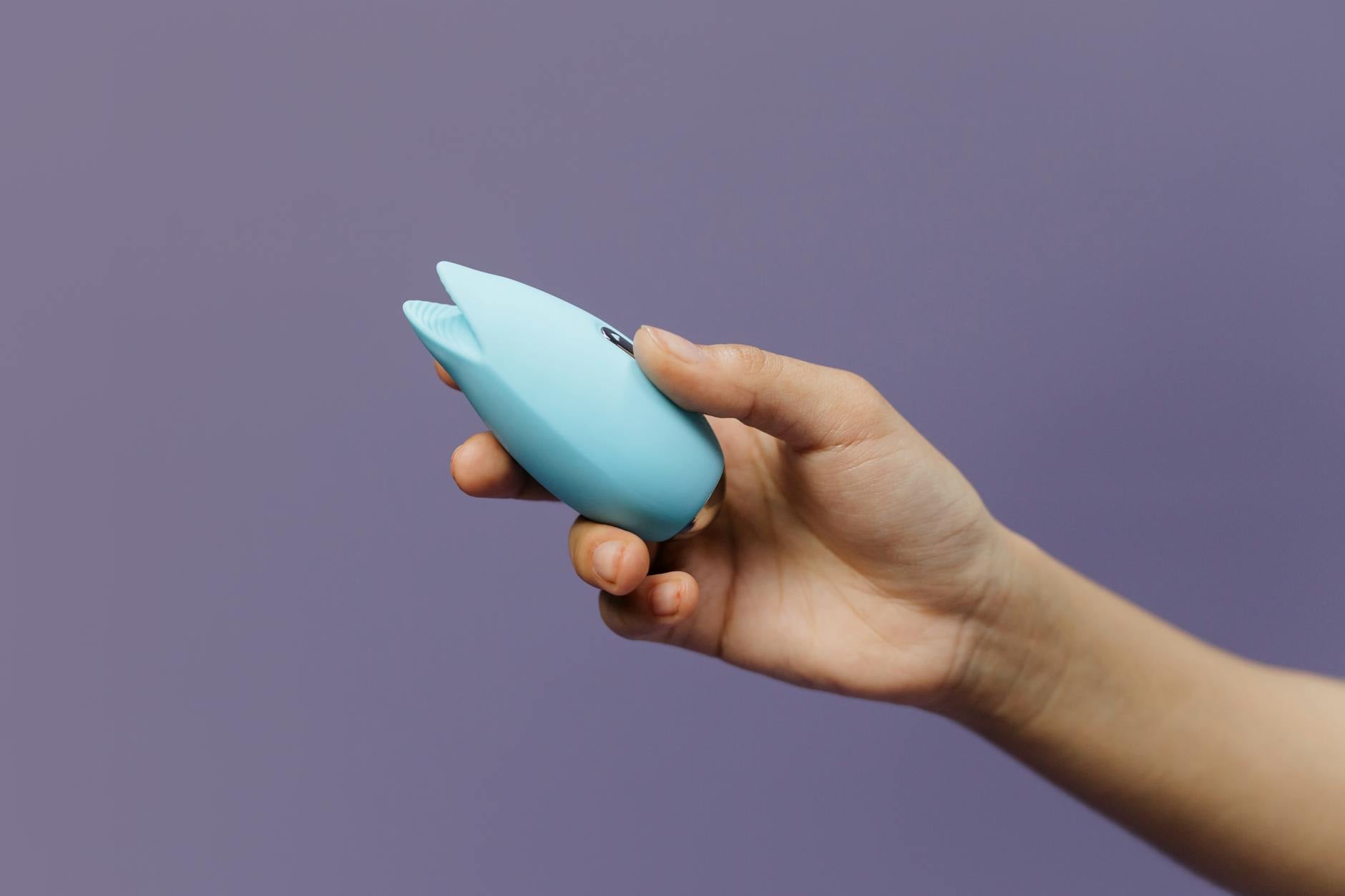
Here's what most people get wrong about vibrator settings
You buy a lemon clitoral vibrator. It arrives. You turn it on at full power and assume that's the only way to use it. Or worse, you assume full power is "too much" and keep it on setting 1 forever. Both approaches leave pleasure on the table.
Arousal isn't static. It changes across your cycle, your mood, your stress levels, and what kind of touch actually lands for you that day. A lemon vibrator's power comes not from one "perfect" setting, but from matching intensity to what your body is signaling it needs right now.
The three arousal types and what they need
I've worked with hundreds of couples and individuals navigating pleasure, and I've noticed arousal clusters into three loose categories. Knowing which one you're in changes everything about how you use your lemon vibrator.
Slow-burn arousal. This is the kind that needs time. You're not immediately responsive. Your mind is half somewhere else. You need a preamble. For this arousal style, a lemon vibrator's lower settings (patterns 1-3) paired with longer foreplay works magic. Start at pattern 1. Let that subtler stimulation draw you in gradually. Give yourself 10-15 minutes before reaching for a higher intensity. Many people find they achieve deeper, longer-lasting orgasms this way.
Building arousal. You're already somewhat engaged. Maybe you've had 5-10 minutes of foreplay, or you've been thinking about this all day. Your body is ready to move through intensities. This is where a lemon vibrator earns its reputation. Start at pattern 2-3, spend 3-5 minutes there, then ascend to pattern 4-5. The climb itself becomes part of the pleasure. You're not chasing one peak. You're creating a wave.
Lightning arousal. You know it when you feel it. Your body is immediately, intensely responsive. Maybe it's been days since you had any touch, or your partner just said the right thing, or you're coming back from a long break and sensitivity is high. For this state, jumping to pattern 5-6 on your lemon vibrator can feel absolutely necessary. Honor it. Sometimes pleasure is about meeting yourself where the intensity already is, not where you think you "should" start.
How cycle changes shift what works
If you menstruate, arousal sensitivity moves through predictable phases. Understanding this prevents the frustrating moment of "wait, why doesn't my lemon vibrator feel like it did last week?"
During the follicular phase (right after your period through ovulation), estrogen is climbing. Tissue is fuller. Your clitoris has more blood flow. Pattern 4-5 on a lemon vibrator often feels more responsive than it will in two weeks. You might orgasm faster and feel multiple waves back-to-back. Lean into higher intensity. Your body can take it.
During the luteal phase (after ovulation), progesterone rises while estrogen dips. Everything feels less immediately responsive. This isn't a problem. It's information. Your lemon vibrator isn't broken. You're not broken. You just need to shift down to patterns 2-4 and extend your warm-up time by 5-10 minutes. You might find that orgasms feel deeper and more full-body instead of quick and sharp. Different, not worse.
If you don't menstruate, arousal still fluctuates based on stress, sleep, whether you've had enough water, and what's happening in your relationship. The principle stays the same: notice what pattern your body is asking for that day.
The partner dynamic that changes everything
When you're using a lemon vibrator with a partner, the setting you need often depends on whether your partner is involved directly or present but separate.
If your partner is stimulating you while you use your lemon vibrator, you'll almost always want lower to medium settings (patterns 1-4). The vibration is working alongside their touch, not replacing it. Your nervous system is processing two sensations at once. Higher intensity becomes overstimulating rather than amplifying. Start low. Your partner can watch what settings make you respond, what makes you tense up, what makes you ask for more.
If you're using your lemon vibrator while your partner watches or during partnered sex, you have more freedom with intensity. You know your own arousal arc. You can chase pattern 6 if that's what gets you there. Many people find they prefer higher settings when they're managing the experience solo, lower settings when they're coordinating with someone else.
Talk about this before the moment arrives. "I like to start slow and build" is a completely normal thing to say to a partner. So is "sometimes I need intensity right away." The specifics make the experience better for both of you.
Intensity versus pattern variety
People often focus only on the power level of a lemon vibrator. They forget that most quality lemon clitoral vibrators come with multiple patterns alongside intensity settings.
Some patterns are steady (consistent vibration at whatever level you set). Other patterns pulse, escalate, or wave. You might discover that pattern 3's wave at medium intensity does more for you than pattern 6 at full power. That's not weird. That's useful data.
When you're experimenting, try this: pick one intensity level and spend a minute on each pattern. Notice which patterns create sensation that feels good versus which ones feel like they're "doing something to you" rather than working with you. Your nervous system has preferences. A lemon vibrator is versatile enough to match them.
The reset moment that changes the game
Here's something I've noticed that most guides skip: sometimes the best thing you can do mid-session is take a break. Not for 10 minutes. For 20-30 seconds.
This is especially true if you've been at pattern 5-6 and sensation is starting to feel numb rather than building. Drop down to pattern 1 or 2 for 30 seconds. Let your nerve endings reset. Then climb back up. That micro-break often creates more pleasure than continuous high intensity ever could.
It's the same principle as why a lemon vibrator's suction action (the way it works) creates such effective sensation. It's not relentless pressure. It's a gentle pull and release. Rhythmic. Your body loves rhythm. You can create that internally by matching your intensity to what your nervous system is actually processing.
When you're not sure what you need
Start at pattern 1. Give yourself at least 10 minutes before going higher. Notice where your breath is, whether your pelvic floor is tensing, whether you're thinking about the sensation or lost in it.
If you're tense and thinking about it after 10 minutes, go higher. Sometimes arousal needs more intensity to break through distraction and settle into pleasure. If you're already breathing deeper and your mind has quieted, stay where you are. Going higher might pull you out of a good place.
This isn't about finding the "right" setting. It's about learning to read yourself. A lemon vibrator is just a tool. The real skill is understanding what your body is asking for and having the agency to give it that.
People also ask
What's the best lemon vibrator setting to start with if I've never used one?
Start at pattern 1 or 2 at the lowest intensity. Spend at least 5-10 minutes there before moving higher. Most people who say a lemon vibrator "didn't work" actually gave it 90 seconds at maximum power. Your body needs time to wake up to sensation, especially if you're new to this. Slow beginning almost always feels better than jumping straight to intensity.
Can using high settings on a lemon clitoral vibrator desensitize me?
Not permanently. Temporary numbness during a session happens when you've been at one setting too long, and the solution is what I mentioned: drop down to pattern 1-2 for 30 seconds, then resume. If you take a 1-2 day break between sessions, full sensation returns. The body's nervous system resets quickly. The myth of permanent desensitization usually masks a simpler truth: you're using high intensity when your body actually wants variety.
Should I use different settings depending on whether I'm with a partner?
Absolutely. When someone else is involved, lower settings (patterns 1-4) tend to feel better because you're coordinating sensation. When you're alone, you have freedom to chase whatever pattern and intensity your body wants in that moment. There's no "correct" way. It's about matching the tool to the context.
Why does my lemon vibrator feel less intense after a few uses?
You're not desensitizing. You're acclimating. Novelty matters. The first few times you use a lemon vibrator, the sensation is fresh and surprising. After a few sessions, your nervous system knows what to expect. The fix isn't buying a stronger toy. It's using pattern variety, taking a 1-2 day break, or shifting intensity settings mid-session. Keeping it unpredictable keeps it effective.
Is there a "too high" setting on a lemon vibrator?
If your body is tensing, you're thinking about pain, or sensation feels numb instead of pleasurable, that's too high for that moment. Ease down. Pleasure is the metric, not how many bars the intensity reaches. Some people's nervous systems genuinely prefer patterns 3-4 all the time. That's not leaving intensity "on the table." That's knowing yourself.
How do I know if a lemon vibrator pattern is working or just feeling numb?
Working sensation feels like it's pulling something forward, building toward something, creating momentum. Numbness feels static, like your body is "receiving" stimulation rather than responding to it. If you're second-guessing whether it's working, it usually isn't working yet. Shift down, pause for 30 seconds, or switch patterns. Real pleasure is unmistakable.
The one thing that matters most
Honestly though, the single best lemon vibrator setting is the one that makes you lose your train of thought. Not because it's forceful. Because it's right. Your body knows when something's landing. Your only job is to be curious enough to explore until you find it.
Ready to understand your own arousal better? Reach out at /contact if you want to talk through specific questions about pleasure, partnered dynamics, or relationship intimacy.