Let's start with the thing nobody warns you about
SSRIs and SNRIs save lives. They're also notorious for making orgasm feel like climbing a mountain with weights on your ankles. You might still feel desire. You might be fully aroused. And then nothing happens, or it takes forty-five minutes, or it happens but feels muted and distant. That's not you. That's the medication blocking dopamine and serotonin signaling to the nerve endings that fire during pleasure.
Here's the thing though. That flatness isn't permanent. And there are tools specifically designed to work with your nervous system when it's running on reduced fuel.
Why antidepressants numb sensation in the first place
Sexual side effects from antidepressants are wild because they're actually the same mechanism that makes the drugs helpful for anxiety and depression. SSRIs lower serotonin reuptake, meaning more serotonin stays in the synaptic gap. That's great for mood regulation. But it's the opposite of what you need for arousal. Arousal runs on dopamine. When serotonin floods the system, dopamine gets muscled out.
Think of it like turning down the volume on your entire sensory system. The receptors in your clitoris are still there. The neural pathways are intact. But the signal is quieter. Orgasm becomes something you have to work toward, and even then it might feel like watching it happen behind glass instead of feeling it.
The good news. This happens because of how the medication is processing through your brain, not because your body is broken. That distinction matters for what comes next.
Air-suction technology and why it works better when sensation is blunted
There are two fundamentally different ways to stimulate the clitoris. Vibration, which sends rapid oscillations through tissue. And suction, which creates gentle pressure and release cycles that mimic oral sex. When your nervous system is running on reduced dopamine, vibration alone sometimes feels like background noise.
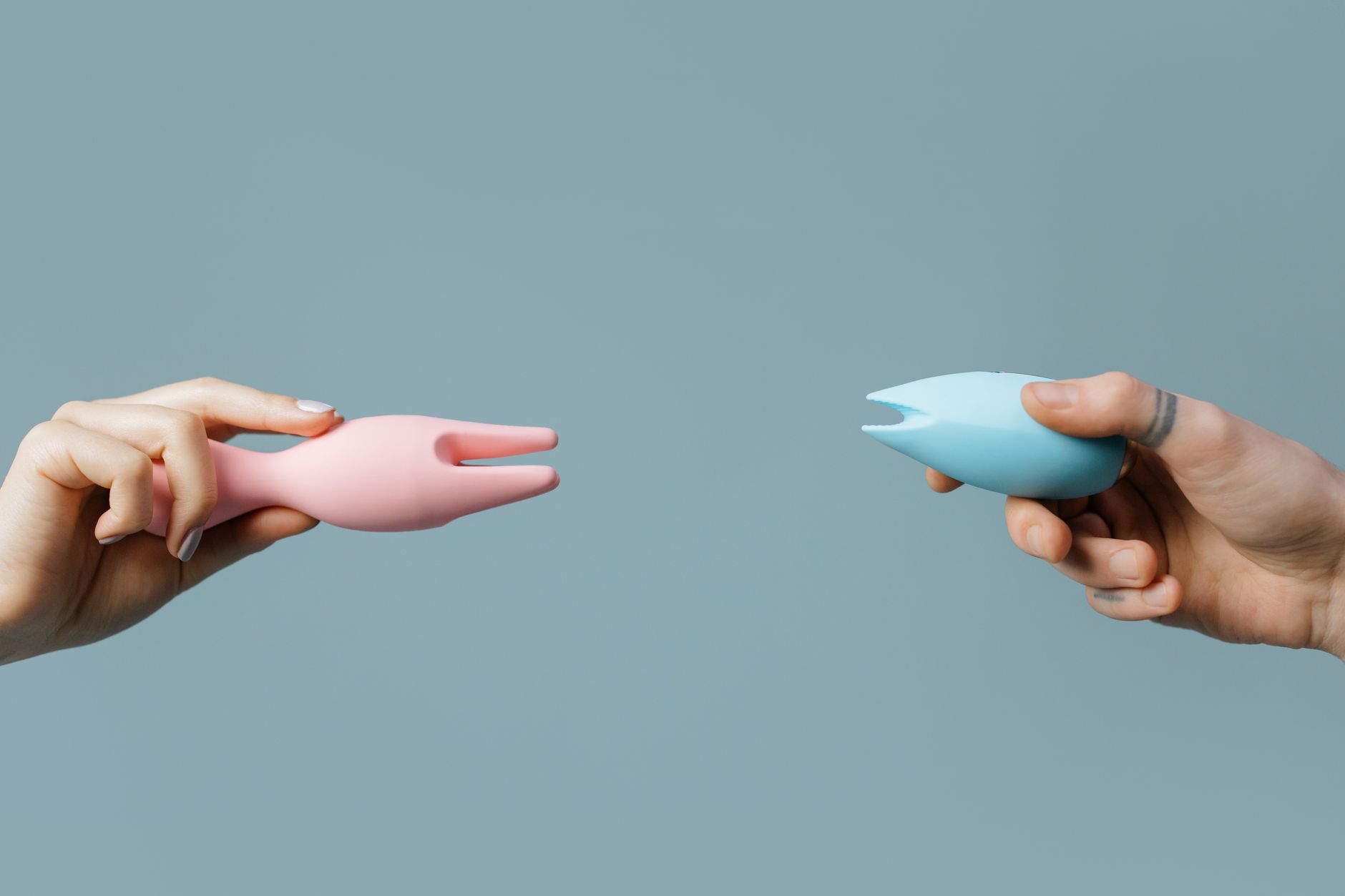
Air-suction clitoral vibrators like the Lem work differently. They use rhythmic pulses of air pressure to stimulate nerve clusters without requiring the same intensity of direct contact. This matters because antidepressants don't just muffle sensation. They often make direct pressure feel uncomfortable or overstimulating.
Suction-based lemon clitoral vibrators bypass that friction entirely. Instead of relying on sustained pressure or rapid vibration to reach threshold, they create a pattern that your nervous system reads as something new and interesting. When dopamine is low, novelty matters. Your brain needs that signal to wake up.
Clients on antidepressants report that air-suction feels like rediscovering pleasure rather than chasing it. The stimulation reaches deeper. It feels less like knocking on a locked door and more like the door opening on its own.
Starting over after sensation goes numb
If you've been on antidepressants for a while, your baseline might feel so flatlined that you're not sure what pleasure is supposed to feel like anymore. That baseline is workable, not permanent. But you need a reset strategy.
Three foundational steps. First, lower your expectations for the first few sessions. You're not chasing orgasm. You're looking for any sensation that feels different or new. A tingle. A warmth. A tiny spark of something. That's the signal you're rewiring toward.
Second, give yourself twice as much time as you think you need. When dopamine is suppressed, arousal builds slowly. Budget twenty to thirty minutes for solo exploration, not ten. Your nervous system isn't slow or broken. It's recalibrating.
Third, try a lemon vibrator at a lower setting than you'd normally use, even if you used this type before medication. Your sensitivity might have shifted. Pattern 1 or 2 on the Lem is a real starting place, not a sign you've lost capacity. Many people find that what felt perfect before medication now feels like too much. That's adjusting, not decline.
The pattern that helps dopamine-restricted arousal
When you're working with a lemon clitoral vibrator and your dopamine is suppressed, the rhythm of stimulation matters more than the intensity. Constant vibration at a moderate speed doesn't work well. Your brain isn't getting enough novelty to override the serotonin suppression.
Instead, try patterns that pulse, pause, and change. The Lem's varied patterns are specifically useful here. Spend thirty seconds on one pattern. Switch to another. Let your nervous system register the change. That contrast is what wakes up dopamine. You're not looking for intensity. You're looking for variety.
Some people find that external stimulation alone isn't enough when antidepressants are fully active. If that's you, adding internal stimulation or changing position matters. Combining external and internal sensation creates a more complex signal that dopamine can't easily ignore. Sometimes the solution isn't a stronger vibrator. It's a richer pattern of sensation overall.
When to talk to your doctor about medication timing
There's a real conversation to be had with your prescriber about sexual side effects. Lots of people don't bring it up because they assume it's the cost of feeling okay. It's not. There are concrete options.
Some antidepressants have lower sexual side effect profiles than others. Bupropion, for example, often maintains dopamine better than SSRIs. If your current medication is creating serious sexual flatness, asking about a switch or an addition is totally reasonable. Augmentation with bupropion or adjusting timing (taking your dose at night instead of morning) can shift things.
Other people add an agent to offset the sexual side effects. Buspirone or sildenafil are prescribed specifically to counteract SSRI-related difficulty with orgasm. These are conversations worth having with your provider. The goal is your full health, not just your mood.
If changing medication isn't an option you want to explore, lemon clitoral vibrators and air-suction technology are solid tools for working within your current neurochemistry.
Rebuilding arousal when dopamine is suppressed
Antidepressants can flatten desire itself, not just sensation. If you're not interested in sex at all, that's different from being interested but unable to feel it. Rebuilding actual desire takes a different approach than rebuilding sensation.
Start with curiosity, not goals. What felt good before medication. What sounds interesting now. Not in a performance way. In a genuine