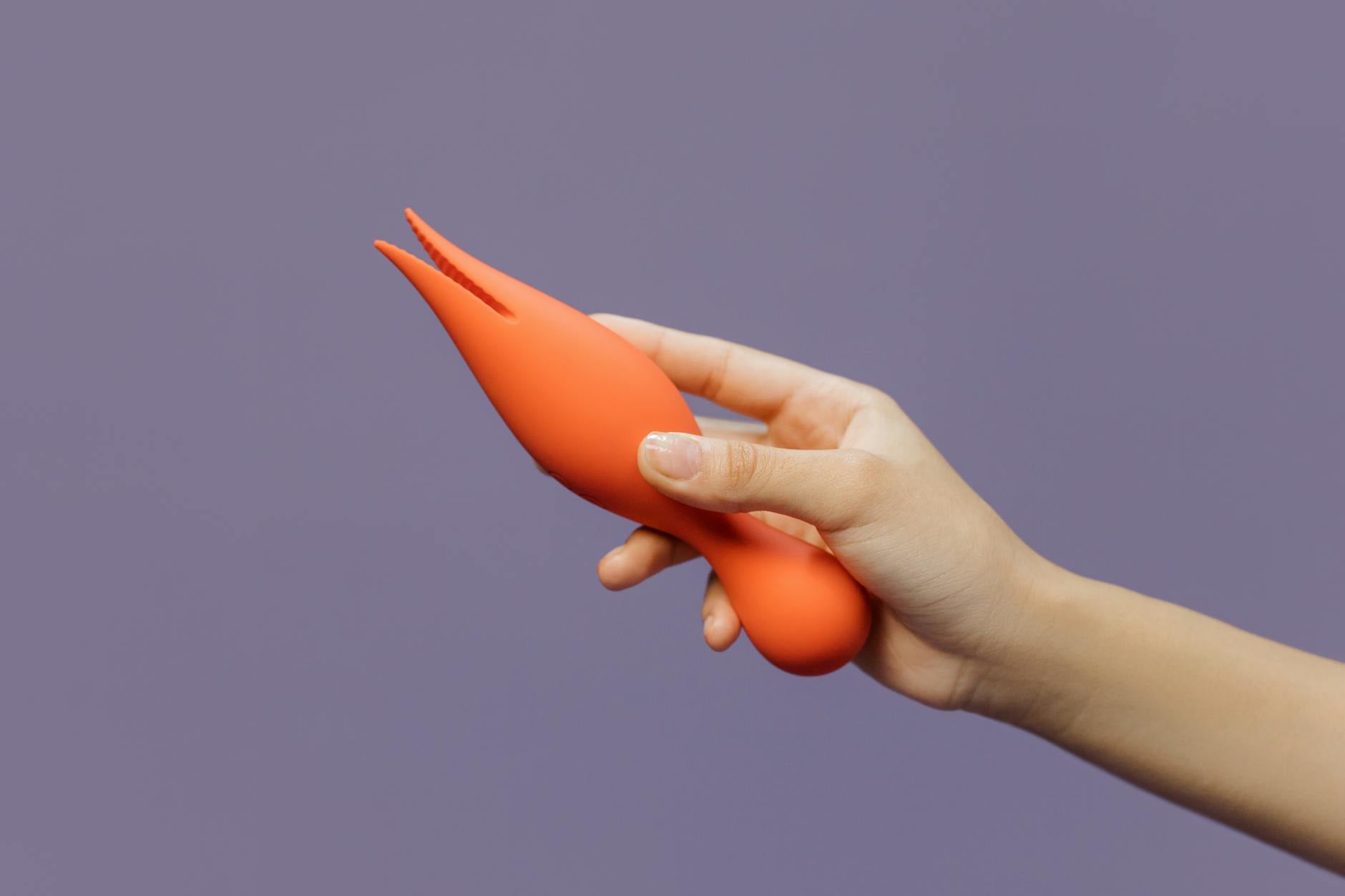
How to Use a Lemon Vibrator for Better Orgasms After Antidepressants
Let's be real: antidepressants save lives. They also sometimes numb your ability to feel pleasure. That's not weakness or a sign the medication isn't working. It's a known, common side effect. And it's fixable.
Here's what happens physiologically and what a clitoral vibrator like the Lem can do about it.
How antidepressants change sensation
Most antidepressants, particularly SSRIs (the class that includes sertraline, paroxetine, and fluoxetine), work by increasing serotonin availability in the brain. That's brilliant for mood regulation. The catch: serotonin also influences arousal, genital sensation, and orgasm intensity.
For some people, the effect is mild. For others, it's dramatic. You might notice:
- Arousal takes longer to build
- Orgasms feel distant or muted
- You can achieve orgasm, but it takes significantly longer
- The sensation itself feels less intense, even when orgasm does arrive
- Loss of spontaneous desire (you're not horny out of nowhere anymore)
None of this means your body is broken. It means your nervous system is processing differently. A lemon vibrator addresses this by amplifying the sensory signal your clitoris receives, essentially turning up the volume on a quieter sensation.
Why air-suction vibrators work better than traditional ones here
Here's the key difference: a standard vibrator moves side to side or up and down. A lemon clitoral vibrator like the Lem uses air-suction technology. It creates a gentle rhythmic pulling sensation across a larger surface area of tissue.
Why does this matter when you're on antidepressants?
Direct vibration can feel muted when sensation is already dampened. You end up chasing intensity, turning up patterns that become uncomfortable. Air-suction stimulates deeper nerve clusters without relying solely on direct friction. For people on SSRIs, this often translates to feeling sensation you didn't think was there.
Many of my clients report that switching from a traditional vibrator to a lemon sucker style toy was the turning point. The sensation felt accessible again, even on their medication.
Starting over with arousal timing
One of the hardest shifts with antidepressant-related numbness is accepting that arousal just takes longer now. That's not failure. That's biology.
Here's what I recommend:
Budget 20 to 30 minutes for solo exploration. Not because you need to be patient in a resigned way, but because longer warm-up time often rewires your expectation. When you stop rushing toward orgasm and instead explore sensation for its own sake, you notice things you'd missed before.
Start with the Lem on lower patterns. Patterns 1 through 4 tend to work best when sensation is muted. High-intensity patterns often feel either nothing or suddenly overwhelming. There's less middle ground. Work at the lower end until you feel a response, then gradually increase.
Take breaks. Not because you're giving up, but because your brain's arousal pathway is slower. A 2 to 3 minute pause actually helps. You might notice sensation building during that pause, which is your nervous system catching up.
The mindset piece that changes everything
Here's what I've observed in my practice: the psychological weight of antidepressant-related sexual side effects often outlasts the physiological one.
You can feel "broken." You might think your partner will lose attraction. You might believe pleasure just isn't available to you anymore. That story gets in the way more than the medication does.
When you sit down with a lemon vibrator, you're not trying to "fix" yourself. You're having a conversation with your body about what it needs right now. That's a different energy entirely.
Give yourself permission to explore without a goal. Not "Will I have an orgasm?" but "What does this feel like?" When you remove the pass-fail criterion, you notice nuance. And nuance is where pleasure lives.
Communication if you have a partner
If your partner is in the picture, separate the two conversations early. "Antidepressants have changed my sexual response" is a medical fact. "I want us to reconnect" is a relationship need. Conflating them turns both into unsolvable problems.
Your partner doesn't need to fix you. They need to understand the timeline. Your orgasm might take 30 minutes now instead of 10. That's not rejection of them. That's neurology.
Using a clitoral vibrator during partnered sex is one path. Some people use it solo, rebuild confidence in their own pleasure, then bring that back to partnered time. There's no right sequence.
When you bring a lemon vibrator into partnered play, frame it as expansion, not substitution. "This helps me feel sensation better. I want to use it with you." That's a statement of desire, not inadequacy.
When to talk to your doctor
If orgasm is completely absent (not delayed, absent), or if arousal has vanished entirely, bring it up. Your doctor has three main options:
One, adjust timing. Some people take their medication at night instead of morning, which can shift when sexual dysfunction peaks during the day.
Two, add a medication that counteracts the sexual side effect. Buproprion is often added to SSRIs for exactly this reason. So is buspirone. These aren't magic, but for some people, they're transformative.
Three, switch to a different antidepressant. Not all SSRIs affect sexuality equally. Sertraline and paroxetine tend to have stronger sexual side effects than citalopram or escitalopram. If you've been on the same medication for years and this is new, it might be worth revisiting.
None of this means stopping your medication. It means working with your doctor to find the version of "healthy" that includes both mental stability and pleasure.
The practical setup that works
When you're combining an antidepressant with a lemon vibrator, environment matters more than you'd think.
Find a private space where you won't be interrupted or worried about being overheard. Antidepressants already slow down arousal. Anxiety about interruption kills it entirely.
Warm up slowly. Some people use their hands first, building sensation gradually before introducing the vibrator. Others jump straight to the Lem on a low pattern. Neither is wrong. Your job is to notice what your body responds to.
Use lubricant. Even if arousal creates some natural lubrication, adding a water-based lube helps sensation travel more clearly across tissue. It also reduces any friction friction that might feel too intense on lower vibrator settings.
Give yourself at least four separate sessions before deciding whether this is working. Your nervous system needs repetition to rewire its expectations. Session one might feel like nothing. Session four sometimes feels revelatory. Patience genuinely pays.
Knowing the difference between numbness and something else
Not every orgasm difficulty after starting antidepressants is medication-related. Sometimes life stress, relationship tension, or unrelated medical factors pile on at the same time you started the medication.
The question to ask yourself: Did this shift specifically when I started or increased the medication? Or has it been gradual, tied to other life changes?
If the timing matches the medication, you've got your answer. If it doesn't, you might need to look elsewhere. A good therapist can help you sort through that.
Many people benefit from both: addressing the medication side effect while also doing emotional work around pleasure, permission, and desire. Your lemon clitoral vibrator helps with the physical piece. A therapist or coach helps with the mindset.
The long view
Antidepressants aren't forever for everyone. Some people take them short-term, others long-term. If you're in the short-term camp, sexual function often rebounds when you taper off (though always do this with medical guidance).
If you're on them long-term, pleasure adaptation is very real. Your body learns. Your nervous system adjusts. The Lem or other clitoral vibrators aren't a temporary workaround. They're often a genuine improvement. Many people report that orgasms feel stronger on a lemon vibrator than they ever did without medication.
Your medication is keeping you alive. Your pleasure matters too. Using tools like a quality clitoral vibrator isn't settling. It's honoring both parts of your health.
FAQ
Can I use a lemon vibrator while I'm on SSRIs?
Absolutely. There are no drug interactions between antidepressants and external vibrators. If anything, a lemon clitoral vibrator can help restore sensation that the medication has dampened. Start on lower patterns and increase gradually as you feel your response building.
How long until I feel a difference with a lemon vibrator on antidepressants?
Some people notice a shift in their first or second session. Others need three to four sessions before their nervous system adjusts to the new type of stimulation. Give yourself at least a week of regular exploration before concluding it's not working. Your body learns.
Should I tell my partner I'm using an adult toy because of my antidepressants?
That depends on your relationship and your preference. If you want to bring it into partnered play, yes, a conversation helps. If you're exploring solo to rebuild your own sense of pleasure first, you don't owe anyone a play-by-play. The key is being honest with yourself about what you need.
Does using a lemon vibrator mean my medication isn't working?
No. Your medication is working if it's stabilizing your mood. Sexual side effects are a separate thing from treatment efficacy. You can have a perfectly functional antidepressant and still experience sexual dulling. A vibrator addresses the pleasure piece without compromising your mental health.
What if I still can't orgasm even with a lemon vibrator?
If sensation is truly absent (not delayed, absent), this might be a sign to revisit with your doctor. Sometimes a timing adjustment or a different medication removes the barrier. Sometimes adding a second medication helps. You deserve both mental health and sexual function. Neither requires sacrificing the other.
Can antidepressant sexual side effects go away on their own?
Yes, for some people. Your nervous system sometimes adapts over months or years on the same medication. For others, the side effect persists. If it does, that's when tools like a quality lemon clitoral vibrator become invaluable. You're not waiting for your body to fix itself. You're actively reclaiming pleasure.
Final word
Antidepressants are medicine. So is pleasure. A lemon vibrator isn't a Band-Aid on a broken system. It's a tool that helps your nervous system access sensation that's still there, just quieter. For many people on SSRIs, it's the difference between resigned acceptance and genuine, full-bodied joy.
Your medication deserves credit for keeping you stable. Your pleasure deserves credit too. Both are part of a life worth living.
If you're ready to explore, start low, go slow, and give yourself at least a week before deciding what works. Your body knows how to feel good. Sometimes it just needs the right tool to remember.