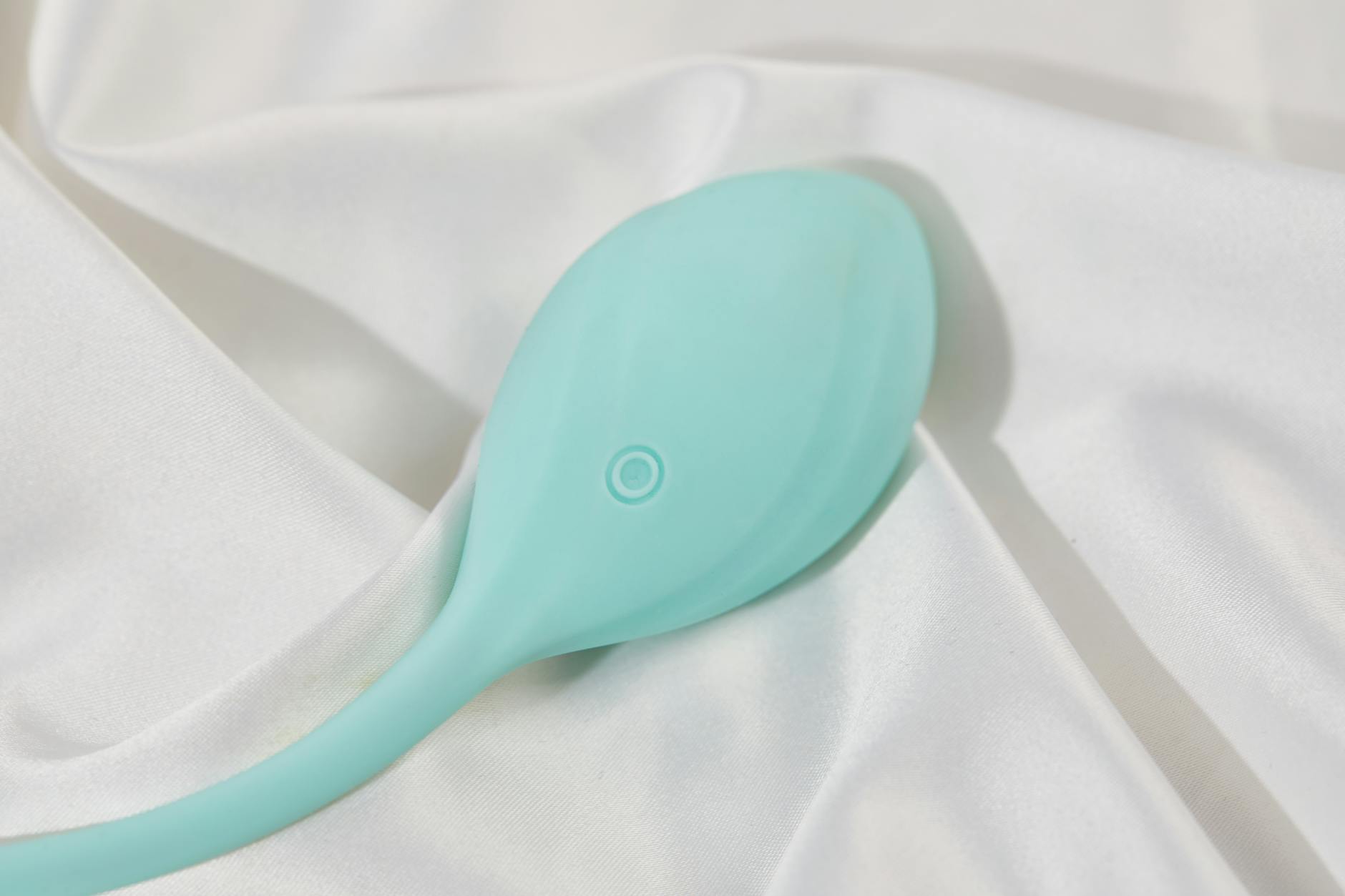
Let's talk about the cycle no one mentions
Your body doesn't experience pleasure the same way every single day. Hormones shift. Sensitivity changes. Arousal builds differently depending on where you are in your cycle. And most guides pretend this isn't happening, which means you're either struggling when things feel harder or accidentally overstimulating yourself when your body's more responsive.
Here's what actually happens physiologically, and how a lemon vibrator works better when you work with your hormones instead of against them.
Why your body responds differently across your cycle
Estrogen and progesterone don't stay flat. Estrogen peaks around ovulation and again in the luteal phase. Progesterone rises after ovulation and dominates the second half of your cycle. These aren't subtle shifts. They change blood flow to your genital tissue, affect nerve sensitivity, alter lubrication, and actually shift how your brain processes pleasure.
During the follicular phase, when estrogen is climbing, tissue is thicker and more resilient. Blood flow increases. Your brain is primed for novelty and stimulation. This is when your lemon clitoral vibrator often feels most intense.
During ovulation, sensitivity peaks. The suction sensation from devices like the Lem vibrator can feel almost overwhelming in the best way. Some people orgasm faster. Some find they need less intensity to reach that point.
During the luteal phase, progesterone dominates. Tissue becomes slightly more delicate. You might feel less natural lubrication. Your nervous system is often more on edge, which can mean you need either gentler stimulation or more deliberate warm-up time to access pleasure. This is where most people accidentally push too hard because they're comparing their response to how they felt last week.
Mapping your pleasure needs across four phases
Menstrual phase (days 1-5). Hormones are low. Your pelvic floor might feel tender. Many people find heavier flow days uncomfortable for internal stimulation, but external clitoral stimulation often feels amazing. Start your lemon vibrator at patterns 1 or 2. Skip the complexity. Focus on duration over intensity. Ten to fifteen minutes of gentle suction can feel incredible when your body's in this phase, and you'll likely recover sensation faster than you expect.
Follicular phase (days 6-14). Estrogen climbs. You feel sharper. Your tissues are more robust. This is when you can experiment with higher intensity patterns on your lemon sexual toy without discomfort. Try patterns 3 through 7. Your body can handle more friction, more pressure, more novelty. If you've been curious about something new, this is the window.
Ovulation (days 14-16). Peak estrogen, peak sensitivity. This is when your lemon clitoral vibrator might feel almost too much, but in the way that makes orgasms come faster and feel deeper. Some people skip intensity entirely and focus on rhythm and duration. Others go all the way up to the highest patterns. The key is checking in with yourself halfway through. If you're approaching numbness, pull back. If you feel like you could stay there for hours, you've found your sweet spot.
Luteal phase (days 17-28). Progesterone rises, estrogen drops at the end. Your nervous system is often more activated, which can feel like anxiety or irritation but is often just heightened awareness. This is when you need the longest warm-up window. Sometimes fifteen minutes of lower patterns before even attempting higher intensity. Some people find they need lubrication they didn't need in the follicular phase. Your lemon adult toy can still feel incredible, but you're working with a different starting point.
The practical adjustments that actually work
Here's what to track, and what to change based on what you learn.
Pattern selection. Most people stay on patterns 1 through 3 during menstrual and luteal phases, then move to 3 through 7 during follicular and ovulation. This isn't a rule. It's a starting hypothesis. Track what feels good and adjust.
Session length. During high-estrogen phases, you can usually sustain twenty to thirty minutes of use. During luteal, cut back to ten to twenty. Your nervous system recovers faster, and you're less likely to tip into numbness.
Warm-up time. This is the adjustment that matters most. During follicular and ovulation, five to ten minutes of lower patterns wakes everything up. During luteal, plan for fifteen to twenty minutes. If you're feeling touch-aversive, this isn't a sign to skip pleasure. It's a sign to extend warm-up even more.
Lubrication. Water-based lube becomes more essential during luteal. Your natural lubrication often decreases. A good lube doesn't mean something's wrong. It means you're respecting where your body is.
Spacing between sessions. During follicular, you might comfortably use your lemon vibrator every other day. During luteal, most people benefit from spacing sessions further apart, every third or fourth day. This gives your nervous system space to recover and keeps sensation crisp.
What to do when pleasure disappears mid-cycle
Sometimes you'll sit down with your lemon sucker and nothing happens. No arousal. No sensation. No interest. This is not a sign that something's broken. This is almost always a hormonal dip, usually in the middle of the luteal phase when progesterone peaks and estrogen bottoms out.
Your move: don't push. Give it a day. The urge comes back. In the meantime, if you want contact with yourself, try non-orgasmic touch. Use your lemon vibrator on the lowest pattern for five minutes with zero expectation of climax. Sometimes pleasure unlocks through relaxation rather than stimulation.
If the absence lasts longer than a few days consistently, check in on other variables. Sleep, stress, medication, relationship tension. Hormones aren't the only thing that affects desire. But hormones are usually the loudest signal, so start there.
Syncing with a partner across your cycle
If you have a partner, one conversation you'll eventually want to have is about what you need during each phase. Not in a clinical way. But something like, "Around mid-cycle I feel like going a lot deeper, and the week after ovulation I usually need more warm-up time." This takes the guesswork out and makes the person you're with feel like they're part of the solution rather than accidentally pushing too hard.
Some couples find that higher-estrogen phases are when they introduce their lemon vibrator as part of partnered play. Lower phases are when they use it solo or as part of foreplay that's more about sensation than outcome. That rhythm often reduces performance pressure and keeps things feeling fresh.
When to see someone
If your cycle stops entirely and doesn't return within three months, if you're experiencing severe pain during sex that changes with hormonal phases, or if pleasure has completely vanished and isn't cycling back with your hormones, talk to a gynecologist trained in hormonal health. These aren't signs that lemon clitoral vibrators won't work for you. They're signs that something bigger might need attention first.
Your cycle is information. Your lemon vibrator is a tool. When you sync the two, pleasure stops being something you're always chasing and starts being something you're actually meeting halfway.
Frequently asked questions
How do I know which cycle phase I'm in if my cycles are irregular?
If your cycle is irregular, tracking apps like Flo or Clue can help predict ovulation based on basal body temperature or cervical mucus. But honestly, the simplest method is keeping a one-line daily note about arousal level and sensation. After two or three cycles, patterns emerge even if timing's inconsistent. You'll notice that every twenty-five to thirty-five days, arousal peaks and tissue feels more responsive. That's your ovulation window. Adjust intensity upward that week regardless of app predictions.
Can I use my lemon vibrator during my period?
Yes, completely safely. The suction sensation from a device like the Lem vibrator doesn't push flow up into your uterus or cause any damage. Some people find period sex uncomfortable and skip it. Others find it relieves cramps. If you're concerned about mess, use it in the shower or on a dark towel. Your body isn't fragile. It's menstruating, not broken.
Why does my lemon clitoral vibrator feel numb during the second half of my cycle?
Progesterone is likely dulling sensation, and you might be pushing harder as a result, which dulls it further. Reverse the logic. Lower your intensity by two to three patterns. Extend warm-up by five minutes. Use lubrication. Often sensation will sharpen back up within three to five days. If it doesn't, you might benefit from taking a longer break during luteal phases, which allows your nerve sensitivity to reset.
Does hormonal birth control change how my lemon vibrator feels?
Sometimes significantly. Hormonal birth control (pills, patches, rings) flattens the natural cycle, which means your sensation and arousal might feel more stable across the month but potentially less intense overall. Some people find they need to adjust patterns upward compared to their pre-pill baseline. Others don't notice much change. The best approach is to track your baseline before starting, then reassess after three months of use. Your gynecologist can also discuss how specific formulations affect sensitivity if you want to optimize.
What if I want the intensity during my high-hormone phases but none of the sensitivity I'm getting?
This is the classic ovulation challenge. High arousal paired with almost fragile sensation. The answer is usually to slow down the ramp-up. Spend longer at lower patterns before moving up. This builds arousal gradually without shocking your tissue into numbness. Some people also find that spacing stimulation more consciously prevents the numb feeling. Five minutes on pattern 5, take a break, then five minutes on pattern 6. Your nervous system recovers between rounds, and sensation stays sharp.
Can cycle syncing help me achieve better orgasms with my lemon vibrator?
Absolutely. Most people report that the deepest and fastest orgasms come during the ovulation window when hormones are highest and tissue is most responsive. But this doesn't mean other phases are worse. They're different. Luteal phase orgasms are often more full-body and take longer to build. Follicular phase feels faster and more acute. Neither is better. Both are information about what your body is capable of at that moment. Work with it instead of expecting every session to feel the same.