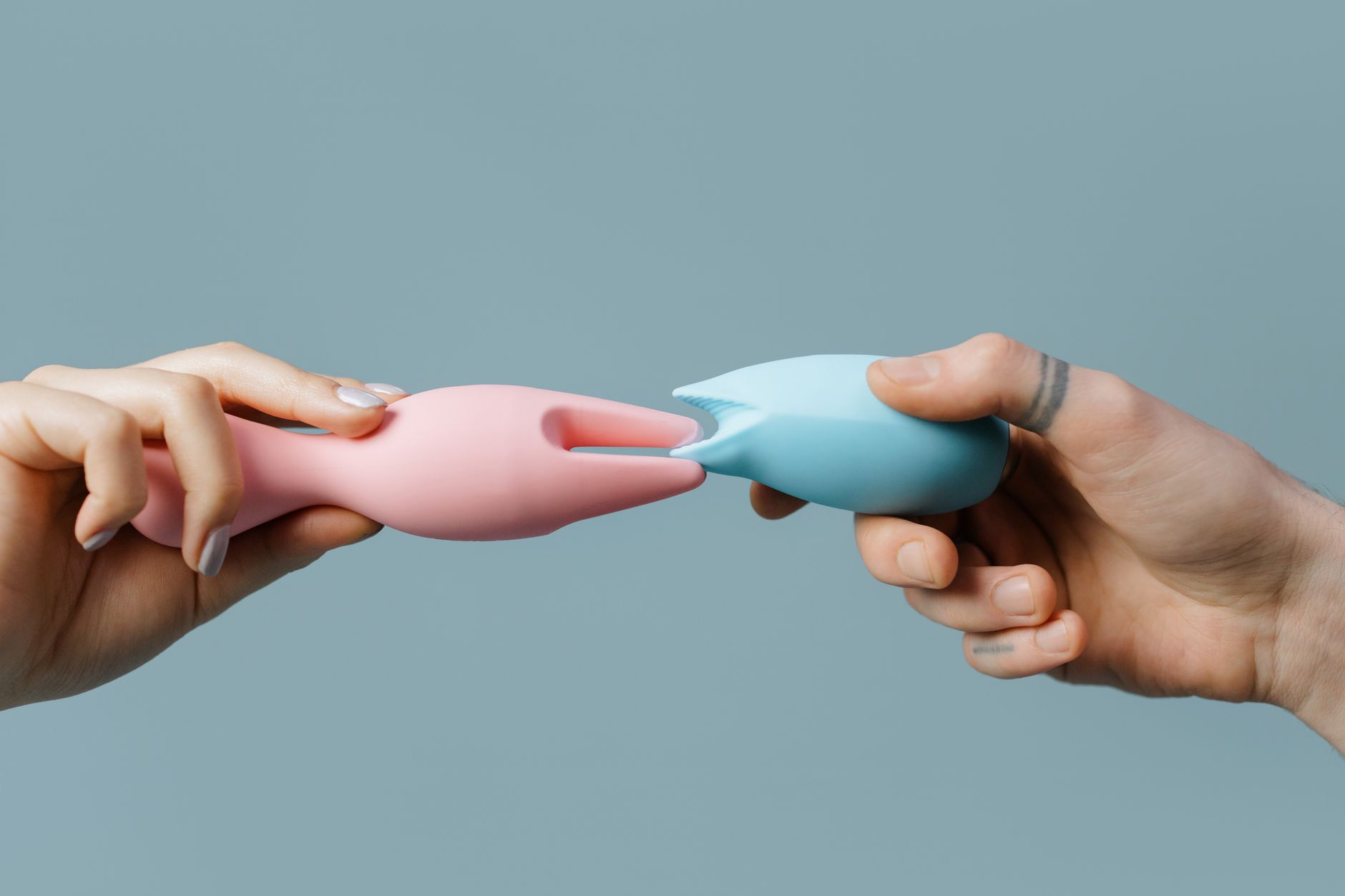
How to Use a Lemon Vibrator for Better Pleasure During Perimenopause
Let's be real. Perimenopause is messy. Your cycle does weird things. Your sleep tanks. And somewhere in all that chaos, you might notice that sex feels... different.
The good news? A lemon vibrator can actually work better during this phase than it did before. But first, you need to understand what's actually happening in your body and why sensation shifts the way it does.
What perimenopause does to arousal
Here's the honest part that doctors often skip. Perimenopause isn't one thing. It's a 5-10 year phase where your hormones start cycling erratically. Estrogen and progesterone don't follow the old pattern anymore. Some weeks you feel like yourself. Other weeks, you feel like someone else entirely.
This matters for pleasure because estrogen affects vaginal blood flow, lubrication, and how quickly tissues respond to touch. But here's what's tricky: your estrogen isn't dropping steadily. It's bouncing around. One week it might be high. The next week it bottoms out. Your body never quite adjusts because the target keeps moving.
Most people describe this as either "I'm more aroused than ever" or "I feel numb." Both happen. Sometimes in the same week.
Why sensation feels less predictable
Three things change during perimenopause that mess with sensation:
Erratic blood flow. In a regular cycle, blood flow to your vulva is predictable. During perimenopause, it varies wildly. Some sessions, you feel everything intensely. Others, you feel almost nothing. This isn't psychological. It's physiological.
Skin thickness changes. The tissue in your vulva gets thinner and drier as estrogen fluctuates. Not permanently. But week by week, it's changing. This means direct pressure can feel uncomfortable one week and perfect the next.
Longer arousal time. Your brain's arousal response isn't broken, but the chain reaction between brain and body takes longer to fire. You might need 20-30 minutes instead of 10. This is normal. And this is why a lemon clitoral vibrator changes everything.
Why lemon vibrators excel during perimenopause
A lemon sucker works through air-pulse suction, not vibration. That distinction matters right now.
Traditional vibrators require consistent direct contact with tissue. During perimenopause, when tissue thickness and lubrication are unpredictable, direct pressure can actually feel uncomfortable. Suction doesn't press. It draws. This means you get intense sensation without the mechanical friction that might sting if tissue is thinner than usual.
The lemon vibrator also gives you precise control over intensity. You can start at pattern 1, which is gentler than most vibrators' base setting. That matters when arousal is sluggish. You're not fighting to feel something. You're building gradually.
Another reason lemon adult toys work here: the suction sensation creates a consistent chain reaction. Your nerves don't care that your hormones are bouncing around. The stimulus is stable, even if your body's response to it varies day to day.
How to adjust your routine for perimenopause
Start your warm-up earlier. Give yourself 25-35 minutes, not 15. Arousal takes longer right now. This isn't failure. It's just the current reality. Using a lemon clitoral vibrator at lower intensities early on lets you build sensation gradually without pressure.
Use lubrication, even if you don't think you need it. Some weeks you'll self-lubricate fine. Other weeks, tissue is drier. Have a good water-based lube nearby and don't wait to use it. Dry tissue plus friction equals discomfort. Lubricated tissue plus suction equals pleasure. The math is simple.
Start at intensity 1 or 2. The full power settings on a lemon vibrator can be overwhelming if tissue sensitivity has shifted. Beginning at lower patterns lets your body wake up gradually. You can always turn it up. You can't un-feel something that was too intense.
Pay attention to your cycle. You probably notice when your period is coming. Notice also when arousal feels easier or harder. You might find a pattern. Maybe days 7-14 of your cycle, sensation is sharper. Days 21-28, it's duller. Knowing this lets you adjust expectations and lubricant use accordingly.
Separate sensation from orgasm. During perimenopause, you might have intense sensation without orgasm, or orgasm without the sensation you expected. Both are fine. Stop linking them. Pleasure isn't failure if it doesn't end in orgasm. Sometimes the point is just the feeling.
When to use a lem vibrator instead of manual touch
Manual touch is wonderful. But during perimenopause, it has a friction problem. Your hand creates pressure and movement. If tissue is thin or dry, that can sting. A lemon sucker doesn't have that issue. The suction pulls blood flow to your clitoris without the friction.
This is also why many people find they need a toy during this phase when they didn't before. It's not that they suddenly lost the ability to feel manual touch. It's that tissue changes make suction-based stimulation feel better for right now. This is temporary. Your body will shift again.
Managing discomfort if it shows up
Sometimes, even with lube and lower intensity, something feels off. A little tenderness. A weird sensation. This usually passes within a few minutes once you're warmed up. But if it persists, stop.
Discomfort during sex in perimenopause is often a sign of genitourinary syndrome, which is just fancy talk for "tissues are changing and need support." A topical vaginal estrogen cream, prescribed by your doctor, works brilliantly here. Not systemically. Just locally. Most people see improvement in 2-3 weeks.
The emotional part that nobody talks about
Here's what doctors miss. Perimenopause often arrives with other stuff. Your body changing. Your kids growing up. Relationship questions. Grief. The temptation is to blame everything on hormones. Sometimes it is. Often, your low desire has nothing to do with estrogen and everything to do with stress, resentment, or just being tired.
A lemon vibrator fixes the body part. It doesn't fix the rest. If you're using it and still feeling disconnected from pleasure, that's worth exploring separately. Maybe with a therapist. Maybe with your partner. But don't assume hormones are the whole answer.
Why sensation might actually improve
Here's the thing nobody expects. Some people report that pleasure feels sharper during perimenopause than it did before. Not because hormones are perfect. Because they're finally free to explore what actually feels good without the old patterns.
Your cycle isn't controlling you anymore. Your brain isn't cycling through the same hormonal story. You might find that you're more present. More willing to try things. More interested in yourself as a sensual person outside of procreation.
A lemon clitoral vibrator becomes useful here not because pleasure is broken, but because you're discovering a new version of it.
FAQ
Can I use a lemon vibrator if I'm having heavy perimenopause symptoms?
Yes. But start slowly. If you're having hot flashes, night sweats, or intense mood shifts, your nervous system is already activated. A lemon sucker at lower patterns (1-2) is gentler than a traditional vibrator. Some people find the rhythm actually calms their nervous system. Others prefer to skip sex on heavy symptom days. Both are right.
Does a lemon sucker work if I don't feel much down there right now?
Often, yes. The issue during perimenopause is usually not sensation capacity. It's arousal speed. A lemon vibrator builds stimulation gradually. Starting at pattern 1 and moving up gives your body time to respond. If you still feel numb after 15-20 minutes, stop. Don't push. Numbness usually means you need more warm-up time or lubrication, not a stronger toy.
Should I use a different lemon vibrator during perimenopause than before?
Not necessarily. But you might prefer lower starting intensities and the suction-based design of the lem. If you already have a lemon clitoral vibrator, adjust how you use it. Start lower. Warm up longer. Add lube. If you're shopping new, the lemon sucker design is specifically good for this phase.
What if my partner wants to use a lemon vibrator with me during perimenopause?
Great. Same rules apply. Longer warm-up. Lower starting intensity. Lube. Tell your partner that sensation might surprise both of you some weeks. That's normal. It's not a reflection on attraction or desire. It's tissue and hormones being weird.
Will my sensation come back to normal after perimenopause?
Mostly, yes. Once you hit true menopause and your hormones stabilize at a lower set point, sensation typically becomes more predictable again. It might feel different than it did before. But the erratic bouncing stops. Some people describe post-menopause sensation as sharper and more reliable than perimenopause ever was.
Can I use a lemon vibrator if I'm on hormone therapy during perimenopause?
Absolutely. Same rules. Hormone therapy typically stabilizes your hormones, which can make sensation more predictable. You might find you need less warm-up time. Use the vibrator the same way. Start low. Build up. Pay attention to what feels good. Your body will tell you what's working.
Perimenopausal bodies aren't broken. They're changing. A lemon vibrator adapts to that change better than most tools because it works through suction, not pressure. It gives you control. It builds sensation gradually. And it works whether your hormones are high, low, or completely unpredictable.
If you're curious about trying the suction approach, start with lower intensities and more lube than you think you need. Your body will tell you what works. Listen to it. Your pleasure matters, especially right now.