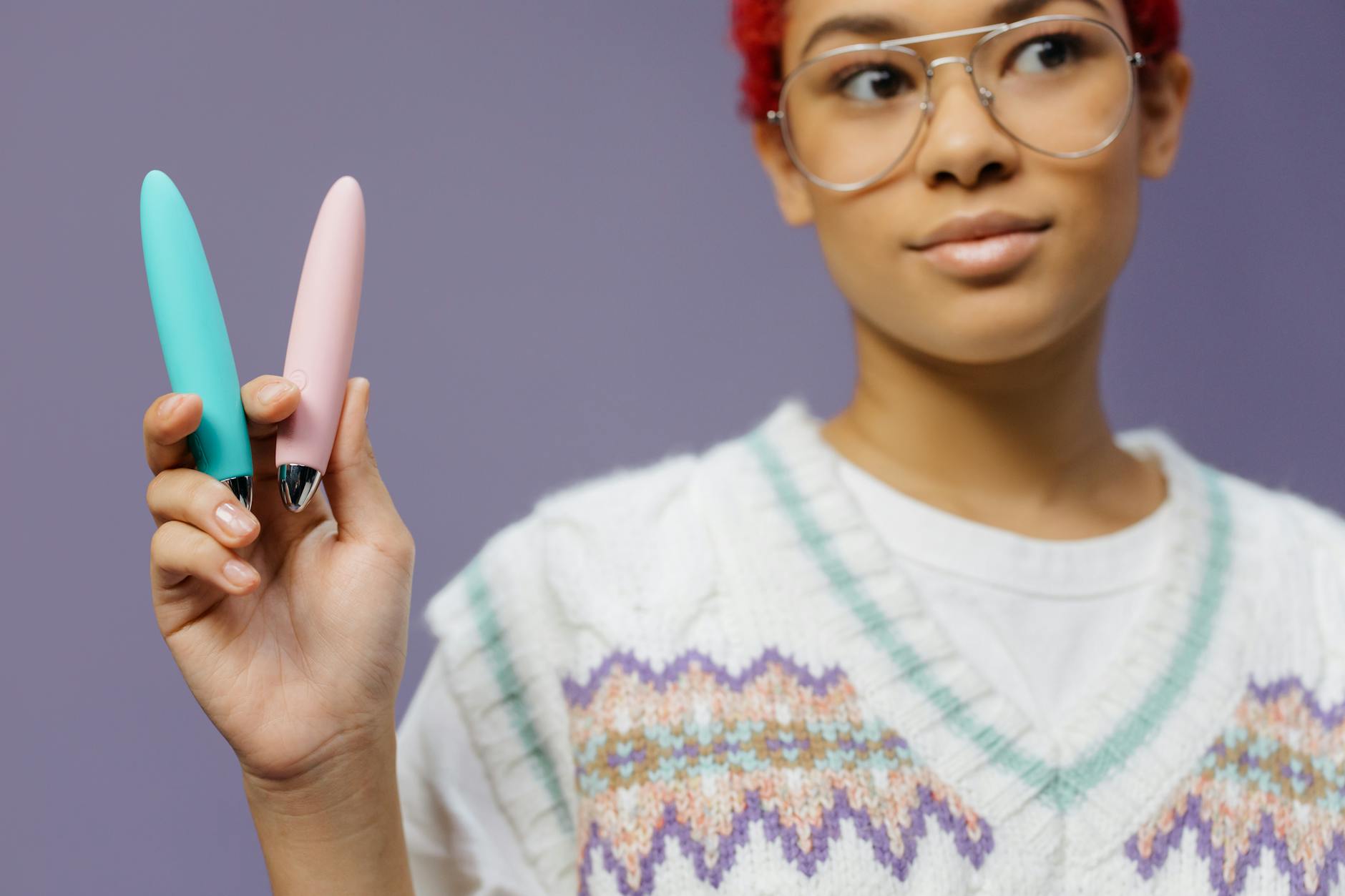
Here's what nobody tells you about your cycle and pleasure
Your arousal doesn't stay the same all month. Neither does your sensation, your orgasm intensity, or the techniques that actually work. Most pleasure advice treats your body like a fixed machine with one optimal setting. That's wrong. The reality is messier and way more interesting.
If you've noticed that your lemon vibrator feels amazing some weeks and almost frustrating others, you're not broken. Your body is literally changing. Hormones shift your blood flow, nerve sensitivity, and what kind of stimulation your nervous system craves. The good news? Once you understand your cycle, you can use a lemon clitoral vibrator in ways that work with your body instead of against it.
How your cycle changes sensation and arousal
Your menstrual cycle is basically four distinct phases, each with its own pleasure signature.
Menstruation (days 1-5). Estrogen and progesterone are both low. Your pelvic floor is often slightly more sensitive because there's less hormonal cushioning. Many people report that lighter, more diffuse stimulation feels better than intense direct pressure. This is when a lemon vibrator's softer suction method often outperforms older vibration-only toys. You might need longer warm-up time, and that's completely normal.
Follicular phase (days 6-14). Estrogen starts climbing. Your blood flow increases, your clitoris becomes more prominent and sensitive, and arousal builds faster. This is usually when pleasure feels easiest. Most people in this phase can go harder and faster without discomfort, and orgasms tend to build more predictably.
Ovulation (days 14-16). Estrogen peaks, then drops sharply as your body releases an egg. You're likely at peak arousal and sensitivity right now. Your clitoris is engorged. Orgasms are usually intense and come faster. If you ever feel like pleasure is almost effortless, you're probably here.
Luteal phase (days 17-28). Progesterone rises while estrogen dips. This is when things get interesting and unpredictable. Some people become more sensitive to stimulation. Others need significantly more sensation to feel it. Arousal is often slower. Many people report that orgasms feel different or take longer to reach. Everything depends on whether your progesterone is climbing or falling.
The catch? Your exact cycle isn't textbook. Stress, sleep, health changes, and medication all shift these phases. But the pattern still holds for most people.
Tracking what actually changes (so you can adapt)
Before you adjust your lemon vibrator use, spend two cycles tracking three simple things: when you naturally feel most aroused, whether your clitoris feels more or less sensitive, and how much stimulation builds an orgasm.
You don't need an app (though they help). Just note these three signals:
Arousal speed. How long does it take before you feel genuinely turned on? One minute? Ten? Twenty? Mark whether it's faster, slower, or about the same as usual.
Sensitivity level. Does your clitoris feel extra tender (soreness when you touch it), normally sensitive, or less responsive than usual?
Orgasm effort. Can you reach orgasm with light stimulation, or do you need more intensity? Does the orgasm itself feel strong, medium, or muted?
Once you have two months of patterns, you'll spot your personal cycle rhythm. That's your roadmap for using your lemon vibrator strategically.
How to adjust your lemon vibrator technique by phase
During menstruation. Start with the lowest setting on your lemon clitoral vibrator. If you're using the Lem, that might mean patterns 1-2 instead of jumping to 3-4. Add lubrication even if you don't usually need it; your tissues are naturally less supported right now. Take longer warm-up time (15-20 minutes of foreplay instead of 10). Many people find that holding the vibrator slightly off the clitoris, letting the suction work broadly, feels better than direct contact during this phase. Your orgasm might feel smaller or take longer to build. That's expected. Enjoy the sensation without the pressure to perform.
During the follicular phase. This is when you can experiment and push a little. Try higher settings on your lemon vibrator. Go faster. Increase pressure. Your body is literally asking for more stimulation right now. Many people find that they can have multiple orgasms more easily in this phase. Use it. If you've been curious about combining your vibrator with a partner, this phase is often when you both feel most into it.
During ovulation. You're at peak arousal and sensitivity. Your lemon vibrator might feel almost too intense on the highest settings. Some people switch to medium settings during ovulation because the stimulation goes deeper or feels sharper. This is also when you might notice that you orgasm with barely any warm-up time. Let yourself enjoy it. This phase doesn't require adjustment so much as permission to go with what feels right in the moment.
During the luteal phase (first half). Progesterone is rising and you might feel increasingly sensitive. Some people need exactly what they needed in the follicular phase. Others need significantly more intensity as progesterone climbs and muffles nerve signals. This is where your personal tracking matters most. If you suddenly need your lemon vibrator on a higher setting than usual, that's not a sign something's wrong. Your neurochemistry is literally dampening sensation. Adjust upward without judgment.
During the luteal phase (second half). As progesterone drops and your cycle approaches menstruation, sensitivity often shifts again. Some people cycle back to wanting gentler stimulation. Others stay at higher intensities all the way through. Again, your tracking data matters more than any rule. Listen to what your body is asking for, not what it asked for last week.
The emotional piece that changes too
Here's the thing that surprises people most: your arousal shifts aren't just physical. Your brain chemistry is changing too. In your follicular phase, dopamine is rising, which makes pleasure feel more urgent and rewarding. In your luteal phase, serotonin matters more, and your brain is often more reward-sensitive to emotional connection or fantasy than to physical technique alone.
If you're partnered, this matters. The week before your period, when you need more physical intensity from your lemon vibrator to reach orgasm, might be the week when you also need more emotional attention from your partner. That's not a contradiction. That's your brain and body asking for two things at once. Telling your partner "I need a longer warm-up and I also need you to pay more attention to me right now" isn't weak. It's honest. And it usually means better sex overall.
Same thing solo. If your cycle phase is asking for more vibrator intensity, it might also be asking for different fantasy, more time alone, or permission to feel less sexy some weeks and absolutely magnetic others. That variance isn't a flaw. It's your body's actual design.
When your cycle doesn't follow the textbook
If you're on hormonal birth control, your cycle doesn't have natural peaks and valleys. Hormones stay pretty steady all month. That means your arousal pattern might stay the same too. Your lemon vibrator technique probably doesn't need monthly adjusting. But some people on hormonal birth control still notice subtle shifts. If you do, tracking still helps you figure out what's happening.
If you're approaching menopause or perimenopause, your cycle might become unpredictable. Some phases might disappear or compress. Your luteal phase might last two weeks or two days. During this transition, the cycle-tracking approach still works. You're just mapping whatever pattern your body is doing now instead of assuming a standard 28-day rhythm.
If you have PMDD, PCOS, or other conditions that affect your cycle, talk to a healthcare provider about how to adjust stimulation safely. Most people with these conditions still experience cyclical sensation changes. Your doctor can help you figure out whether your tracking patterns are normal variation or something to address medically.
The lemon vibrator advantage across your cycle
Why mention a lemon clitoral vibrator specifically? Air-suction devices like the Lem work differently than traditional vibrators. Instead of creating vibration through motor speed, they use gentle suction that you can feel deeply. That matters across your cycle because suction can work well whether your tissues need soft, sustained pressure (menstruation, luteal phase) or whether you want targeted intensity (follicular, ovulation). Most lemon sexual toys offer multiple intensity settings without jumping between completely different stimulation styles. That flexibility means one device works better throughout your whole cycle instead of one toy feeling perfect some weeks and useless others.
FAQ: Your cycle and consistent pleasure
Q: Does everyone's cycle affect pleasure the same way? No. Your personal cycle rhythm matters way more than any textbook pattern. Two people might have identical cycles on paper and experience completely different pleasure shifts. Track your body, not the calendar.
Q: Can I use my lemon vibrator during menstruation? Absolutely. Many people have the most satisfying orgasms during their period. A little blood during sex is normal and manageable. Use a towel if you want. Adjust your technique (usually lower settings, more lube, longer warm-up). Your pleasure matters just as much on your period as any other time.
Q: Why does my lemon clitoral vibrator hurt sometimes but feel amazing other times? Your tissue sensitivity is literally changing throughout your cycle. What feels perfect during ovulation might feel too intense during menstruation. It's not the vibrator. It's your body shifting its sensitivity. Adjust settings, angle, pressure, and warm-up time based on your cycle phase.
Q: Should I track my cycle if I'm on birth control? Only if you notice pleasure changes even on steady hormones. Most people on birth control have fairly consistent arousal and sensation all month. But some do notice subtle shifts. If that's you, tracking still helps. If not, you don't need to force it.
Q: Does cycle tracking work if my cycle is irregular? Yes, but it takes longer. Irregular cycles mean the pattern might be harder to spot in just two months. Give it three or four cycles if you can. You'll start seeing your body's actual rhythm, even if it's not standard.
Q: Can I use a lemon sucker during my luteal phase if arousal is slower? Yes. Slower arousal just means you need longer warm-up, more lube, potentially more intensity, and a lower-stress environment. The suction mechanism of a lemon vibrator often works better for slower arousal than vibration-only toys because the sensation can feel more present and less buzzy.
Q: What if my partner doesn't understand cycle-based changes? Tell them directly: "My body changes throughout my cycle. Some weeks I need more intensity or more time. That's not about them or about us. It's just biology." Most partners want to make pleasure work. Giving them the roadmap usually helps.
Q: Do I need to tell my lemon vibrator about my cycle? No. But you do need to tell your body to listen to itself. Your pleasure matters in every phase. Adjust, experiment, and give yourself permission to want different things different weeks.