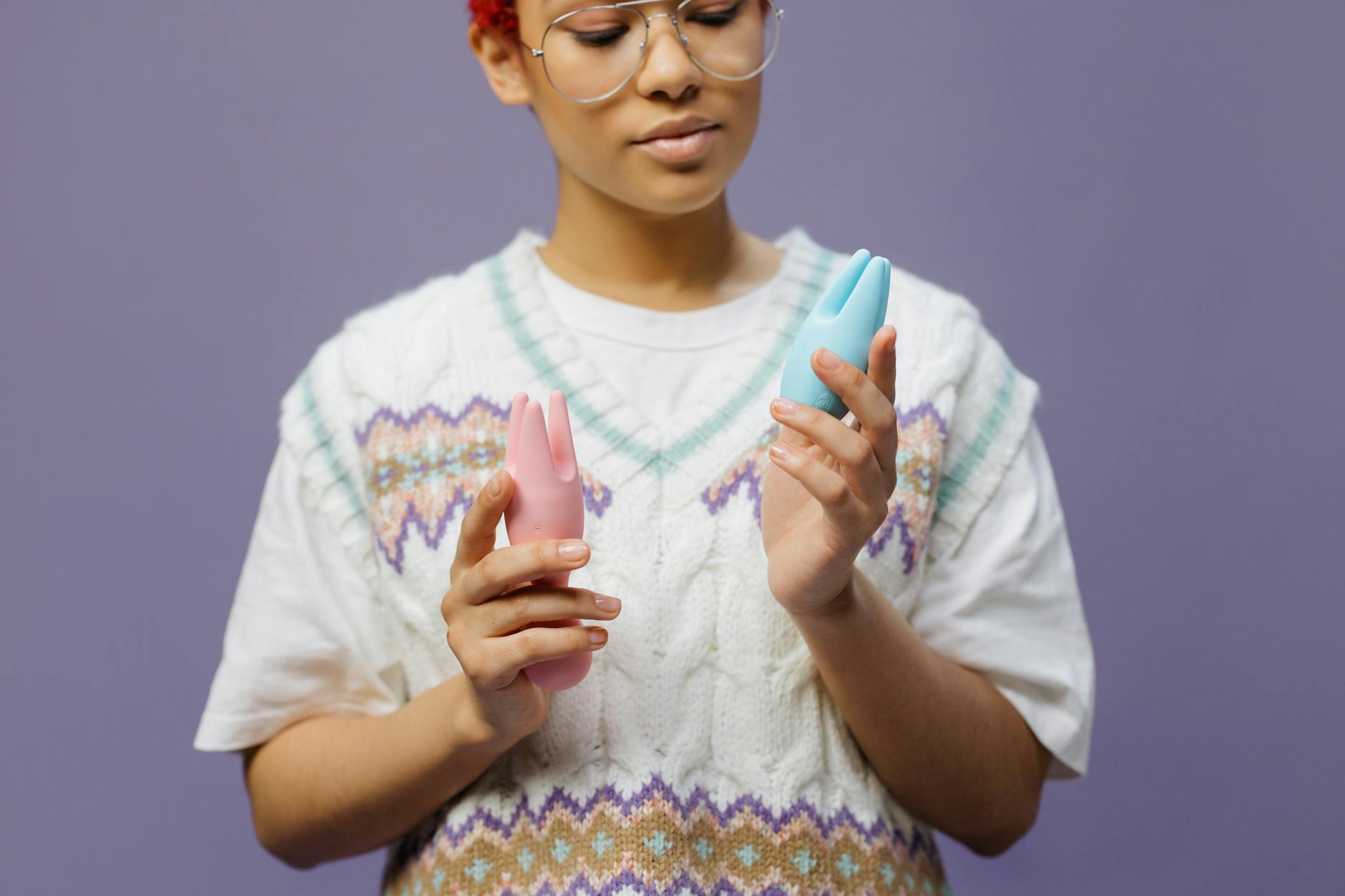
The honest thing about arousal timing
Here's what nobody tells you: one of you gets turned on faster than the other. Always. It's so common that it barely counts as a problem until resentment shows up.
You're ready. Your partner is... still thinking about their work email. So you wait. And wait. And the heat that was there starts to cool, and suddenly the whole thing feels like a negotiation instead of something you both want. That's when a lemon clitoral vibrator becomes less of a toy and more of a solution.
I've worked with hundreds of couples in this exact position, and the pattern is always the same: the faster-arousing partner assumes something's wrong with the slower-arousing one. The slower-arousing partner feels rushed and pressured. Neither is true. They're just built differently, and a simple tool can actually fix this.
Why your arousal timelines don't match (and it's not personal)
Arousal speed isn't a character flaw. It's not about how attracted your partner is to you. It's neurological and hormonal, and it varies wildly between people.
Some brains need 10 minutes to shift from grocery lists to intimacy. Some need 25. Some people's bodies respond quickly to visual cues, others to touch, others to time and context. Testosterone levels, stress hormones, whether they slept well, whether they're distracted by kids in the other room, medication, cycle phases if applicable. The list goes on.
The faster-arousing partner often feels rejected or like they're being punished for being ready. The slower partner feels pressure and shame, which makes arousal even slower. It's a loop that spirals. And it's fixable.
Why a lemon vibrator changes the dynamic
A clitoral vibrator like the Lem does three things that break the waiting pattern:
First, it gives the faster partner something satisfying to do instead of stewing in frustration. You can engage yourself while your partner is building arousal. That's not selfish. That's honest.
Second, it keeps your nervous system activated and engaged. Waiting passively while someone else catches up depletes arousal. Doing something pleasurable for yourself maintains it. By the time your partner's ready, you're not at square one. You're already in the game.
Third, it creates permission. When one partner is using a toy, it signals to the slower partner that this is okay, that pleasure is the point, and that nobody's on a clock. It takes the performance pressure off. People aroused faster when they're not anxious about timing.
The setup that actually works
Talk about it first. Not in the moment. Beforehand.
Say something like: "I love that your arousal takes time. I'm just learning that when I wait passively, I lose mine. Would you be okay if I used a vibrator while we're warming up? It helps me stay with you." Frame it as solving a problem you have, not a problem your partner is.
Then, set a container. Some couples find that 15 minutes of dedicated foreplay, with the faster partner using a vibrator while the slower partner builds arousal through touch or oral sex, works perfectly. The structure removes the ambiguity. Everyone knows what to expect.
Start with external stimulation only. Your partner can kiss you, touch you, talk to you, be present while you use the vibrator. This keeps the intimacy intact. It's not solo play. It's partnered, just with a tool.
With a lemon clitoral vibrator, you can start at lower intensity settings and gradually increase. This lets your partner pace themselves without losing you. You're not racing ahead. You're creating space for them to catch up at their own speed.
What to actually do with your partner present
Here's the step by step that couples report working best:
Minutes 1-5: You're both kissing, touching, talking. Your partner is doing what feels natural to them. No pressure to be anywhere specific yet. This is the warm-up phase for both of you.
Minutes 5-10: You introduce the vibrator at setting 1 or 2. Your partner continues what they're doing. Touch you, kiss your neck, talk to you, stay connected. The vibrator isn't a replacement. It's just assisting. Your partner can watch, can be curious. Some people find it incredibly hot. Some find it mildly interesting. Either is fine.
Minutes 10-15: If your partner's arousal is building, you can increase intensity slightly. They can start moving toward the kind of stimulation they want. If they're still warming up, stay here. No rush.
Beyond 15 minutes: By now, you're likely both aroused and ready to move toward whatever comes next, whether that's more partnered sex, oral sex, penetration, or anything else. The vibrator doesn't have to leave. Many couples find it feels better during partnered sex too, especially if the slower-arousing partner is inside and the faster partner wants external stimulation too.
The communication piece that prevents resentment
The real work isn't the vibrator. It's the conversation around it.
After you use it with your partner for the first time, ask what they observed. Not how they felt about you using it, but what they noticed. Did they feel less pressure? Did seeing you enjoy yourself turn them on? Were they distracted? This isn't therapy. It's information gathering.
Then tell them what happened for you. "When I was active instead of waiting, I didn't feel rejected when you took longer. It actually felt sexy." Or: "Having a container really helped me relax."
Repeat this every few times you try it. Adjust based on what you learn. Some couples find they don't need the vibrator after a while, because once they've established that different timing is okay, the pressure dissolves and arousal syncs up naturally. Some keep using it because they like it. Both are right.
When timing differences hide something else
Sometimes arousal timing isn't actually the problem. Sometimes it's a symptom.
If your partner's arousal has slowed down dramatically and recently, there might be something else going on. Depression, stress, a medication change, resentment about something outside the bedroom, attraction issues, boredom, or exhaustion. A vibrator won't fix those. Conversation will. Maybe a therapist will.
The way to check: has this always been true about your partner's timing? Or did it change? If it changed, ask them directly and genuinely. "I've noticed intimacy takes longer to build with you now. Is everything okay?" Not accusatory. Just curious. Their answer will tell you a lot.
If it's always been this way, and nothing else has shifted, then it's just wiring. And the vibrator approach works.
What lemon clitoral vibrators do that other toys don't
A suction-based vibrator like the Lem is built differently than a traditional vibrator. It uses gentle pulsing waves rather than intense buzzing. That means you can use it longer without overstimulation, which matters when you're still in the arousal-building phase with your partner.
It's also quieter and less visually obvious than some toys, which some couples prefer when they're getting used to the idea. And the sensation is gentler on external tissue, so if you're using it for 20 minutes instead of 5, it won't feel raw afterward.
None of this means it's better than other toys. It just means it tends to work well for this specific situation: extended foreplay where you want to stay engaged without overstimulating.
The thing that actually fixes this long-term
Using a vibrator with your partner is the tactical move. But the real fix is permission.
Permission to have different arousal timelines. Permission to use tools that help. Permission to be honest about what you need. Permission to solve problems together instead of resenting each other for being wired differently.
Once you have that permission, everything else gets easier. The vibrator is just the thing that proves it's possible.
FAQs
Will using a vibrator make my partner feel inadequate?
Not if you frame it right. The magic phrase: "This helps me stay with you." You're not replacing them. You're extending your own arousal so you can meet them where they are. Most partners find that honestly relieving. The pressure to be everything sexually is exhausting. When you take some of that pressure off with a tool, they often relax into things more.
What if my partner wants to use a vibrator too?
Then you're both using them. That's called exploration and it's great. Couples who use toys together report higher satisfaction and more communication, according to research from the Journal of Sex & Marital Therapy. There's no rule that says one vibrator per couple.
How do I bring this up without making it weird?
Outside the bedroom, in a regular conversation. "I've been thinking about our timing thing. I had an idea that might help both of us. Would you be open to trying something?" If they say yes, explain it. If they say no, listen to why. Maybe it's not the vibrator. Maybe it's the conversation that matters first.
Does this work if my partner has never used toys before?
Sometimes. Not always. Some people are uncomfortable with toys, and no amount of logic will change that. Your job is to listen to that without judgment. If they're open to it though, starting with something non-threatening like a clitoral vibrator used on external tissue is way less vulnerable than jumping straight into penetrative toys.
What if we try this and it doesn't help?
Then the arousal timing issue probably isn't the real problem. Go back to the basics. Are you stressed? Is your partner stressed? Is there resentment elsewhere in the relationship? Are you still attracted to each other? Those are bigger-picture questions. A sex therapist can help untangle them. A vibrator can't.
Can we use a vibrator during penetrative sex?
Absolutely. Many couples find that external vibration during penetration actually feels incredible for the faster-arousing partner, especially if the slower-arousing partner is more focused on their own pleasure from penetration. You can both get what you want at the same time. That's the whole point.
The thing to know
Arousal timing differences aren't something you fix. They're something you work with. A lemon clitoral vibrator is a tool that makes working with them feel less like a compromise and more like a solution. But the real shift happens when you both agree that different doesn't mean broken. It's just different. And different can be really good.
If you want to explore how toys and communication patterns work in your specific relationship, reach out to us. We're here to help.