When life upends, arousal is the first casualty
Let's be real. You didn't lose your libido. Your nervous system lost the plot. A promotion, a breakup, moving cities, a death in the family, a financial scare, even a positive change like buying a house. All of these hijack your brain's bandwidth so completely that pleasure doesn't just take a back seat. It gets left at the curb.
Your body isn't broken. It's doing exactly what it's supposed to do when the system perceives threat or massive disruption. When your prefrontal cortex is running 24/7 managing a crisis or processing change, there's no neural real estate left for arousal.
This matters because most people assume their decreased desire is permanent. It's not. It's contextual. And understanding that difference changes everything about how you approach reconnection.
Why major transitions kill arousal so completely
Arousal isn't a mood. It's a physical state that requires your nervous system to feel safe enough to downregulate. When you're in a life transition, your nervous system is on high alert. Whether the change is objectively good or bad doesn't matter. Change itself is a stressor.
Think of it like this: your brain allocates resources in order of survival priority. Right now, your priority list looks like this: navigate the crisis, manage logistics, keep everything from falling apart. Pleasure is somewhere below "remember to eat" and "respond to work emails."
The body's response is measurable. Cortisol spikes. Blood flow diverts away from the genitals toward your muscles and brain. Neurotransmitters that support arousal, like dopamine and norepinephrine, get depleted. Your pelvic floor tenses because it's part of your overall stress response. Your brain literally reduces sensitivity in your vulva because from an evolutionary perspective, orgasm wasn't a survival priority during the Ice Age, and it isn't one now.
But here's the thing that nobody mentions: this is solvable. Not by waiting for the transition to "settle." By deliberately rebuilding the physical pathway to arousal.
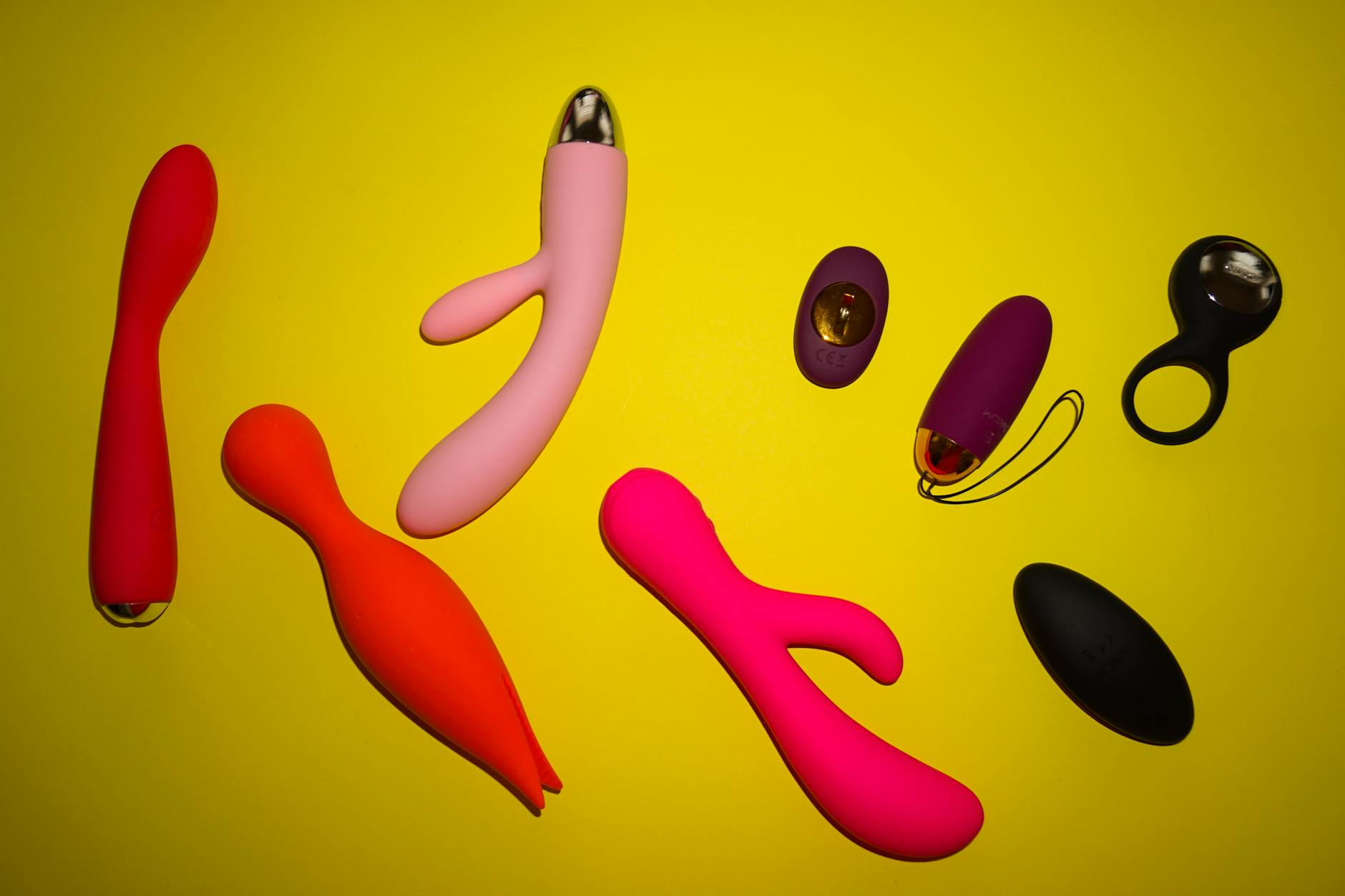
Why lemon clitoral vibrators work when everything else feels impossible
When your nervous system has gone offline, you can't think your way back to desire. You have to navigate around the thinking entirely. This is where lemon vibrators do something other tools struggle with.
Lemon vibrators use suction stimulation instead of direct vibration. That matters right now because suction bypasses the deliberate, goal-oriented part of your brain. You don't have to want it to work. You just have to let the sensation happen. The stimulation activates nerves in your clitoris in a way that feels almost accidental, which is weirdly freeing when arousal feels forced.
Second, lemon suction toys create a gradient of intensity that matches where you actually are. You're not trying to meet a toy halfway. You start at pattern 1 or 2. The sensation builds gradually. There's no performance pressure. No "should" attached to it. Just a gentle, escalating physical sensation that your body can follow if it wants to.
Third, and this is clinical: suction stimulation triggers a response in your pudendal nerve that's distinct from the response to vibration alone. The sensation is novel enough that it can cut through the mental clutter. When you've been running on stress hormones for weeks, novelty actually helps. It gives your brain something specific to focus on that isn't the thing you're worried about.
The reentry protocol: how to actually use a lemon vibrator during transition
Don't treat this like you're supposed to orgasm. You're not. You're building the pathway back.
Start with one intentional session per week. Not because more is bad, but because consistency matters more than frequency right now. Pick a time when you're least depleted. For most people during transitions, that's morning, not night. Mornings have fewer accumulated stressors.
Set a hard boundary on time: 20 minutes maximum, no goal. Not 20 minutes to try to come. 20 minutes to explore what sensation feels like. If you orgasm in minute 3, great. If you don't, also great. The entire point is to reestablish the experience without the pressure.
Use a lemon vibrator on pattern 1 or 2. Higher patterns are for when you're already in the headspace. Right now, start low. Let your body dictate if you want intensity. Your clitoris is hypersensitive during stress, so less is actually more.
Create an actual container. Not a vague "I'll do this sometime." Block the time, lock the door, put your phone in another room. Your nervous system needs to believe that you're genuinely safe and uninterrupted. During transitions, your body is already hypervigilant. You're not asking for ambiance. You're asking for actual security.
Don't pair it with your partner initially. I know that sounds counterintuitive when you're trying to reconnect intimacy. But reconnecting with your own body first matters. Your partner's presence adds a layer of performance pressure that your nervous system doesn't need right now. Solo sessions rebuild the neural pathway. You add the partner element later.
The mental shift that actually changes everything
Here's what works and what doesn't when arousal has flatlined during transition.
What doesn't work: waiting until you feel like it. Trying harder. Guilt. Assuming your partner will understand if you don't explain what you're doing. Comparing this to your pre-transition sexuality.
What works: treating arousal like physical therapy. You wouldn't expect a knee to work properly after injury without rehabilitation. Your nervous system isn't different. It's been through something. It needs a deliberate, consistent, pressure-free way to remember what pleasure feels like.
The psychological reframing that helps most is this: you're not trying to get aroused. You're gathering data about what your body is capable of right now. This week, maybe it's just a tingle. Next week, maybe it's more. The process of noticing what's available, without judgment, is actually the thing that rebuilds desire.
Partners often ask me if they should be involved. The answer is yes, but not how most couples think. The most helpful thing a partner can do during a transition when arousal has tanked is to completely remove the pressure and expectation. When your partner says "take whatever time you need, no pressure," what your nervous system hears is "you're safe." That permission is often the first step toward arousal returning.
When the transition is still unresolved
Sometimes the life change isn't settling quickly. You're still in the thick of it. The stress is ongoing, not temporary.
In those cases, lemon vibrators become a different kind of tool. They're not a path back to where you were. They're a way to access pleasure even while everything else is hard. This is about survival, not recovery. Some weeks, a 10-minute session where you feel sensation is the only self-care that's realistic. That's not a failure of the process. That's you being resourceful.
If the transition involves a relationship shift, that needs to be named separately from the arousal question. If you're grieving, reconnecting with pleasure might feel disloyal. If you've just ended a relationship, arousal might feel complicated. A lemon vibrator isn't a fix for those emotional layers. It's a tool for the physical side while you sort the emotional side with a therapist or coach.
Reconnecting with partners once you've reconnected with yourself
Once you've rebuilt the pathway in solo sessions, integrating a partner can happen gradually. The conversation isn't "I've been using a toy and now I want us to have sex again." It's "I'm learning what my body needs right now, and I'd like you to be part of that."
Many couples find that introducing a lemon vibrator as a partnered tool is actually easier than they expected. Because you've already removed the goal of orgasm, there's no performance pressure. You're exploring together. Your partner gets to see what your body enjoys. You get to feel supported rather than failing. Dynamics shift.
What actually helps is knowing you're not broken
Arousal doesn't disappear during major life transitions because you're broken or unlovable or past your prime. It disappears because your nervous system has been temporarily reassigned to handle something bigger. That's not pathology. That's neurology. And neurology changes when the context changes. The tool you use to rebuild that pathway matters less than the consistency and the pressure-free approach. A lemon clitoral vibrator happens to be excellent at both. But what really matters is you deciding that your pleasure is worth the deliberate, patient work of finding it again, even when everything else feels hard.