
The weird gap nobody talks about
Postpartum intimacy is a minefield packaged as a romance problem. Six weeks pass. Your GP clears you. Your partner looks at you hopefully. And you're thinking: my body still feels like a borrowed thing, I haven't slept in 40 hours, and the thought of someone touching my chest makes me want to scream. That's not a relationship problem. That's a recovery problem wearing a relationship disguise.
Here's what gets lost in the "waiting six weeks" narrative: your body is healing from something genuinely traumatic, whether you had a vaginal birth or a cesarean. Your hormones are crashing hard. Your nervous system is in high alert. And suddenly your partner wants to have sex like everything is fine. A lemon clitoral vibrator doesn't solve this mess. But it does offer a particular kind of workaround that a lot of couples find genuinely helpful during those weird months when you're not "cleared for sex" anymore but "ready for sex" hasn't arrived yet.
Why postpartum is different from any other body change
If you've read articles about using lemon vibrators when your body feels different, this is different. Postpartum isn't just about tissue recovery or hormonal shifts. You're managing simultaneous, contradictory states.
Your pelvic floor might be healing from tearing or from stitches. You might be breastfeeding, which means your touch sensitivity is ramped up in confusing ways. Your dopamine has tanked because prolactin is sky-high. You're touched out because an infant has been on your body for 16 hours a day. And then at night, your partner wants to be close. The disconnect is real, and it matters.
This is where the architecture of a lemon vibrator actually works. Because the Lem or any clitoral suction vibrator isolates pleasure in a way that penetration doesn't. You're not managing anyone else's pleasure. You're not negotiating what penetration means when your pelvic floor is still healing. You're just giving yourself a specific, boundaried experience that your partner can be present for without that experience being about them.
The permission conversation comes first
Before you touch anything, you and your partner need to have a conversation that sounds nothing like a normal sex talk. This one is about what "intimacy" even means right now.
Here's what I tell couples in my practice: Postpartum isn't a time to get back to your normal sex life. It's a time to build a different one temporarily. If you try to use a lemon vibrator like it's a shortcut to the sex you used to have, you'll both get frustrated. But if you frame it as "here's a way we can be close that doesn't require my pelvic floor to do anything," the entire energy shifts.
Ask your partner: Do they want to be in the room? Do they want to touch you, or would you prefer to touch yourself while they're beside you? Do they want to use the vibrator on you, or is that a boundary right now? There's no right answer. The rightness lives in the honesty.
Timing and touch readiness matter enormously
This isn't the time to surprise your partner with a vibrator and hope they get the hint. Postpartum is not when you want to introduce anything that feels like guesswork.
Instead: pick a time when the baby is actually asleep, not just "quiet." When you've showered. When you're not actively leaking from somewhere. When you've had at least three hours without another human needing your body. Start small. Maybe your partner is just sitting next to you, talking, while you explore the lowest settings on a Lem. Maybe they leave the room. Maybe you have your partner's hand on your shoulder, and that's the entire intimacy.
One thing I hear often from postpartum people: "I didn't realize I could ask for that." You can ask for almost anything. Ask for the lights off. Ask for your partner to narrate what they see instead of touching you. Ask to use the vibrator fully clothed. Ask to stop whenever. The binaries of "yes sex" and "no sex" disappear when you get specific.
Lubrication and healing tissue
Your postpartum body is doing something interesting: prolactin is suppressing estrogen, which means your tissue is thinner and drier than usual. This is real. This is also totally manageable.
If you're cleared for any touch down there and you're using a lemon clitoral vibrator, use water-based lubricant even if you don't think you need it. Your clitoral glans isn't the same as your vaginal opening. Just because penetration is off the table doesn't mean the external tissue is ready for friction without support. A bit of lube makes the suction feel smoother and removes the micro-friction that can irritate healing tissue.
If you're not cleared for direct clitoral touch yet, you can absolutely use the vibrator over your underwear or through a thin cloth. A lot of people find that the Lem works surprisingly well with a layer of fabric in between. It dampens the intensity slightly and gives you a buffer while you're still skittish about direct contact.
The conversation with your partner about their experience
Here's something nobody prepares you for: your partner's postpartum experience is also strange and needs attention. They've been sidelined sexually. They're probably touch-starved. They might be feeling guilty for wanting you when you clearly don't want to be touched. That's a lot of conflicting emotions stuffed into someone who is also sleep-deprived and managing an infant.
Using a lemon vibrator together doesn't fix that. But it does create a moment where intimacy isn't about what you can't do. It's about what you're both choosing right now. If your partner uses the vibrator on you, they're engaged in your pleasure in a way that doesn't require you to perform or manage their needs simultaneously. That can be genuinely restorative for both of you.
If you're reading this and your partner isn't interested in watching or participating, that's also fine. Some people find it easier to reclaim their own pleasure solo first, then rebuild partnered intimacy from there. The timeline is yours to set.
Building back to penetration (or not)
One more thing: you don't have to rebuild the sex life you had before. Some people do. Some people use postpartum as a reset point and build something completely different on the other side.
If you do want to work back toward penetration eventually, exploring with a clitoral vibrator first is genuinely valuable. It teaches your nervous system that touch down there can feel good again. It reminds your brain and your pelvic floor what arousal feels like. And it happens at your pace, not on anyone else's timeline. When your pelvic floor is ready for penetration, you'll know because the thought of it stops triggering defensive tension.
The Lem and lemon vibrators in general work well for this because they're not intimidating. There's no penetration involved. There's no performance. There's just a specific, bounded type of pleasure that your body is consenting to in this moment.
When to talk to your GP
If pain happens, tell your GP. Postpartum pain during touch can mean a few things: incomplete healing, infection, scar tissue that's pulling wrong, or sometimes just your nervous system being hypervigilant because birth was intense. All of these are treatable. None of them are reasons to assume you're broken or that you'll never feel good again.
If you're experiencing postpartum depression or postpartum anxiety, sexual touch might feel impossible, and that's a separate conversation. Talk to your GP about that too. Neither of you should be trying to rebuild intimacy while your brain chemistry is working against you.
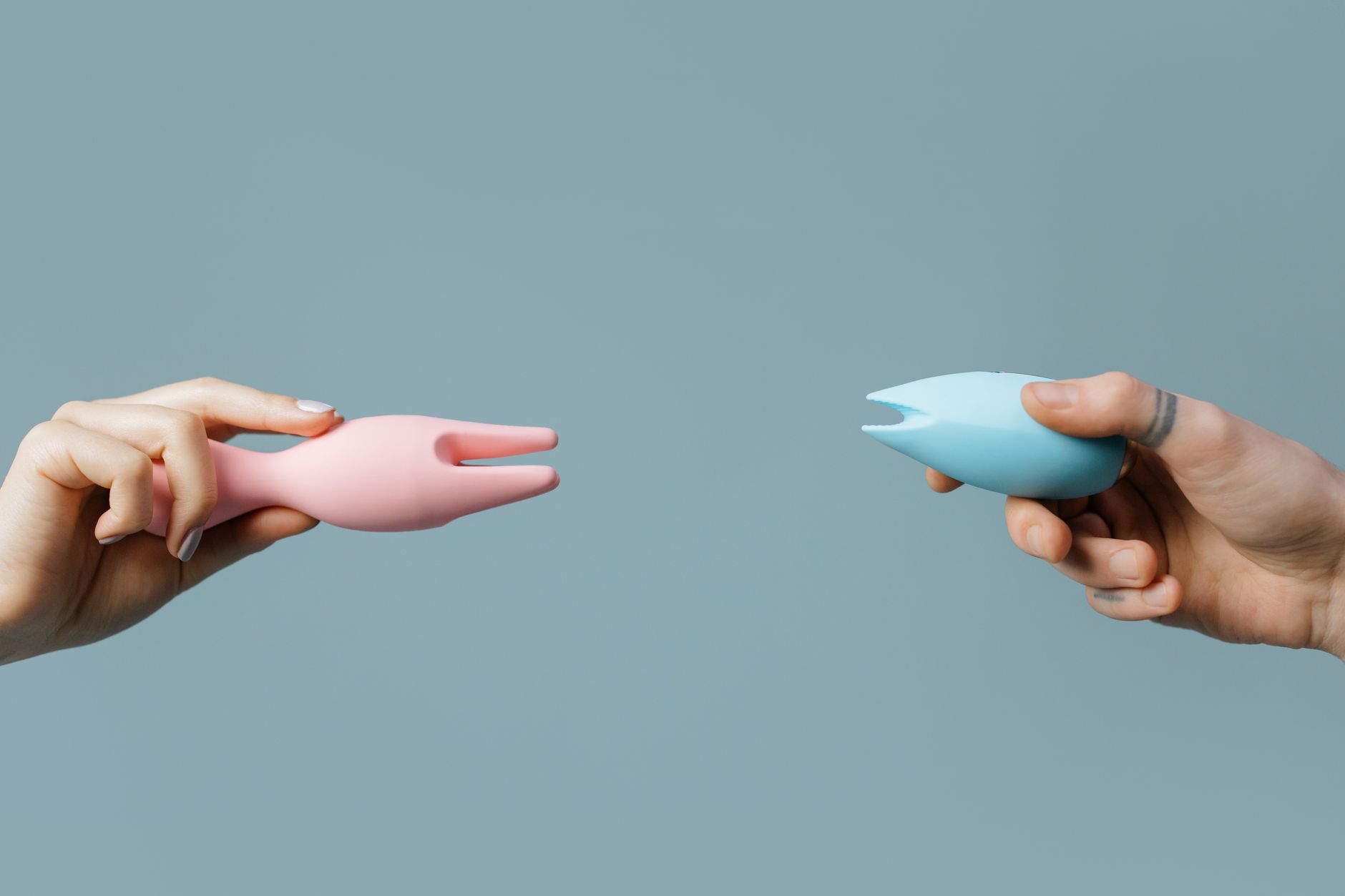
Photo by cottonbro studio on Pexels
The real timeline
Postpartum recovery isn't linear. Some days your body feels almost normal. Some days you're leaking, sore, and absolutely not available. That's not failure. That's healing.
A lemon clitoral vibrator works well during postpartum because it doesn't require you to get to a specific state of readiness. You don't need to want penetration. You don't need to feel sexy. You just need to want five minutes of pleasure for yourself, with your partner present or not. That's achievable on days when a full sex act feels impossible.
Many couples find that reconnecting this way—slowly, specifically, with clear boundaries—actually strengthens their relationship more than forcing themselves back into sex before they're ready ever did.
People also ask
How long after birth can you use a clitoral vibrator safely?
Technically, you can use it as soon as your GP clears you for any sexual activity, which is usually around six weeks. But "cleared" doesn't mean "ready." Your pelvic floor, your nervous system, and your brain all have separate timelines. Some people feel ready at six weeks. Some take months. Starting with external clitoral stimulation through the Lem is gentler than penetration, but it's still touch. If direct contact feels wrong, start over your underwear and work inward.
Can you use a lemon vibrator if you're still bleeding postpartum?
Not if you're actively bleeding heavily or spotting. Wait until bleeding has mostly stopped. Once you're in the lighter spotting phase and you've cleared it with your GP, you can use a vibrator, but hygiene matters. Keep everything clean, consider using a barrier (like a pad or thin cloth), and wash the vibrator afterward. If you're not sure about your bleeding timeline, ask your GP specifically about vibrator use at your six-week check.
What if your partner wants sex but you don't feel ready?
You're not obligated to rebuild your sex life on their timeline. Full stop. If your partner is pressuring you, that's a separate problem worth talking to a couples therapist about. If they're just hopeful and awkward, the conversation is simpler: "I need X amount of time before penetration feels possible, but I'm interested in exploring intimacy like this." A lemon vibrator can be a bridge, but only if both people genuinely want to use it.
Is it normal to not want touch at all postpartum?
Completely normal. Postpartum touch aversion is real and happens because of hormones, physical recovery, and often touch overload from breastfeeding or infant contact. This usually passes, but not on a schedule. If it's been six months and you still can't stand being touched, talk to your GP. Not because something is wrong with you, but because they can help you figure out if it's hormonal, psychological, or both, and what might help.
What settings work best on the Lem postpartum?
Start at the lowest pattern and intensity. Your tissue is sensitive and your nervous system is hypervigilant. You don't need maximum stimulation to feel pleasure. A lot of postpartum people find that lower settings actually feel better than the intensity they used before birth. Your body is different now. Let it teach you what it wants.
Can using a vibrator help with postpartum depression?
Orgasms can trigger dopamine and oxytocin release, which might offer temporary relief. But a vibrator is not treatment for postpartum depression. If you're experiencing depression, talk to your GP. Therapy, medication, or both are the actual treatments. A lemon vibrator can be part of self-care. It's not a replacement for professional help.
The wider picture
Postpartum intimacy is weirdly one of the least talked about parts of early parenthood, even though it's something almost every couple navigates. Your body changed. Your life changed. Your relationship changed. Of course sex is complicated. Of course it needs reworking.
Using a lemon clitoral vibrator with your partner during postpartum recovery isn't about rushing back to normal. It's about building intimacy that fits where you actually are right now. It's about telling your partner: "I'm not ready for that, but I'm interested in this." That specificity, that willingness to try something different, that's what actually rebuilds connection.
If you're in the thick of postpartum and wondering how to navigate this with your partner, consider reaching out to a couples therapist or relationship coach. These transitions go smoother with someone in your corner helping you both figure out what you actually want. You can also contact Lemon Nancy Shop if you have specific questions about how different toys might work for your recovery.
Your pleasure matters. Your healing matters. Your timeline matters. Everything else is secondary.