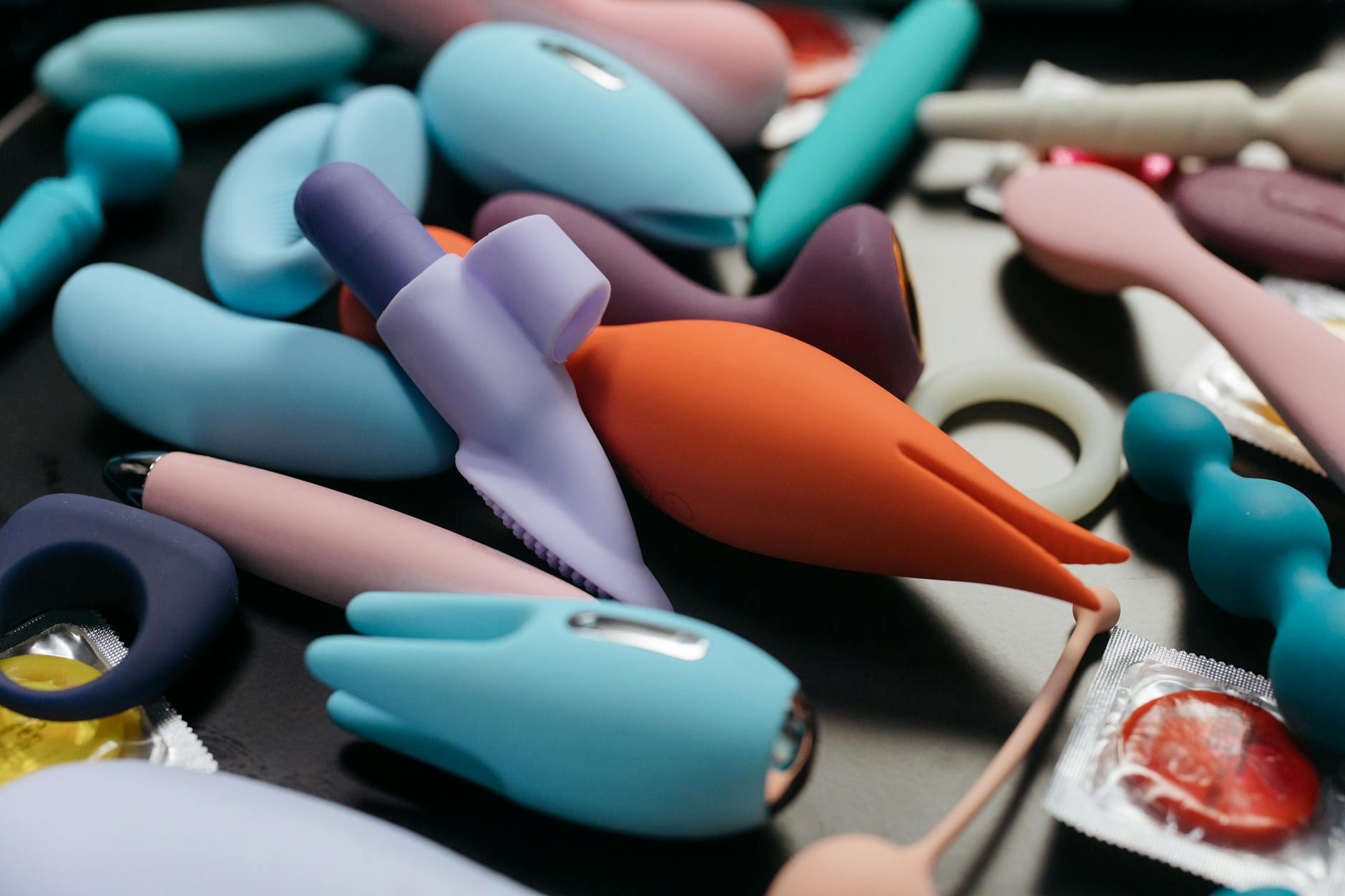
The thing nobody tells you about hormonal birth control and sensation
Let's be real. Hormonal birth control is incredible for preventing pregnancy and managing cycles. But nobody hands you a pamphlet that says, "By the way, your clitoris might feel less responsive." So when external sensation flattens out, you're left wondering if something's wrong with you. It isn't. It's your hormones.
Hormonal birth control works by suppressing ovulation, which means your body runs on different estrogen and progesterone levels than it would naturally. One of the side effects nobody discusses much: that also affects blood flow to your genitals, nerve sensitivity, and how quickly your body responds to touch. You're not imagining it. And more importantly, it's fixable.
What hormonal birth control actually does to sensation
Your clitoris is mostly nerve. About 8,000 nerve endings, all waiting for stimulation. When you take hormonal birth control, your estrogen levels stay relatively flat instead of rising and falling with your cycle. Lower estrogen means:
Reduced blood flow. The tissues of the clitoris engorge when they're well-perfused with blood. Lower estrogen equals less robust blood flow. That engorgement happens more slowly and sometimes incompletely.
Altered nerve sensitivity. Hormones directly influence how responsive your nerve endings are. It's not that the nerves die or disappear. They're just receiving a different chemical signal. The sensation is muted, like turning down the volume on a speaker.
Slower arousal buildup. If arousal used to feel like a quick climb, it might now feel like a slow gradient. This isn't psychological. It's physiological. Your body is literally responding to different hormonal input.
Here's what's important: this is reversible. If you stop the birth control, sensation typically returns within a few months. But if you want to stay on it and reclaim pleasure right now, there's a protocol.
The three-part strategy for recalibrating sensation
**1. Extend your warm-up window.
When sensation is muted, your body needs more time to register stimulation. I recommend budgeting 20-30 minutes minimum before you reach for a lemon vibrator or any clitoral stimulator.
Start with non-clitoral touch. Run your hands over your thighs, your vulva, your labia. Breathe. Let your nervous system know that pleasure is coming. Many people skip this step because they're used to snappier arousal, but when sensitivity is dampened, the slow ramp is non-negotiable.
**2. Use a suction vibrator, not a standard vibrator.
Standard vibrators rely on rapid friction to stimulate nerves. When those nerves are less responsive, friction alone often isn't enough. Suction-based devices like the lemon clitoral vibrator work differently. They create a gentle pulling sensation combined with pulsation, which engages a different set of nerve pathways and often feels more effective when sensation is dulled.
If you're not familiar with lemon vibrators yet, here's the basic mechanics: the device uses gentle suction around the clitoris (not inside) combined with soft pulsing waves. Because it's working with negative pressure rather than just vibration, it reaches nerves that standard vibrators miss. Most people report that suction-based stimulation feels more intense and more satisfying when their baseline sensitivity is lower.
**3. Pair the device with consistent arousal work.
Don't expect the lemon vibrator alone to do the work. Your brain and body are part of the circuit too. While you're warming up and using the device, actually pay attention to what you're feeling. Not in a performance way ("Am I aroused yet?"), but in a curious way ("What sensation is present right now?").
Fantasy, dirty talk, music, images, whatever gets your mind engaged. Your clitoris isn't separate from your brain. When sensation is muted, the brain's contribution becomes even more important. You're essentially layering multiple signals (touch plus mental stimulation) so the cumulative effect overrides the dampened baseline.
Why you should not just increase the intensity
The temptation is to jump straight to the highest setting on whatever device you're using. Don't. Here's why: when you just crank the intensity, you risk irritating the tissue without actually enhancing pleasure. Your goal isn't to overwhelm numb sensation. It's to recalibrate how your nervous system is reading the signals.
Instead, use a moderate intensity setting on your lemon vibrator and focus on finding the sweet spot in terms of pressure and positioning. The clitoris has different zones. Some people find the most sensation on the head itself. Others find side-to-side positioning across the shaft more effective. With dampened sensation, this kind of fine-tuning becomes crucial.
The lubrication factor you're probably missing
Hormonal birth control also typically reduces natural lubrication. Less lubrication means more friction, which can feel uncomfortable or even painful rather than pleasurable. This compounds the sensation-dampening effect because your body is working harder to produce comfort before it can even register pleasure.
Use a quality water-based lubricant generously. This isn't about adding sensation artificially. It's about removing friction so that the sensation you do have can register clearly. Without lubrication, your nervous system is getting conflicting signals (good touch mixed with irritation). With lubrication, the signal is cleaner.
When to talk to your doctor about switching methods
Some people find that different birth control formulations affect sensation differently. A lower-dose pill, a different progestin, or a completely different method (like the copper IUD, which doesn't use hormones) might preserve sensation better for you.
If sensation is affecting your relationship or your quality of life, this is worth discussing with your GP or gynecologist. You're not being dramatic. Side effects are real, and there are alternatives. A good doctor will take this seriously and help you explore options that work for your body and your life.
You don't have to choose between contraception and pleasure. But you do need to acknowledge that the two might interact, and you might need to adjust one or the other.
Real talk about expectations
Using lemon vibrators or any device when hormonal birth control has dulled sensation is not the same as using them when your baseline sensitivity is high. It might take longer to reach orgasm. The orgasm might feel less explosive. That's not a failure. That's just what's true right now for your body.
The goal is not to pretend nothing has changed. The goal is to work skillfully with what you have. That might mean solo sessions feel more productive than partnered sex for a while. That might mean you reach for a lemon clitoral vibrator regularly because it works better than your partner's touch right now. That's information, not a relationship problem.
Most people find that once they stop viewing dampened sensation as a flaw and start treating it as a solvable puzzle, pleasure returns. Not always to exactly the same baseline, but often to something equally satisfying, just in a different shape.
Frequently asked questions
How long does it take for sensation to return after stopping hormonal birth control?
For most people, noticeable changes appear within 4-8 weeks. Full restoration can take 3-6 months, depending on how long you were on hormonal contraception and your individual biology. Patience matters here. Your body isn't sluggish. It's recalibrating.
Can I use a lemon vibrator while still on birth control if sensation is numb?
Absolutely. A lemon suction vibrator is often more effective than standard vibrators when sensitivity is dampened because it engages different nerve pathways. The combination of suction and pulsation tends to cut through the dulling effect better than vibration alone. Start at lower intensity settings and work up as you learn your body's new baseline.
Is numbness a sign I should switch my birth control?
Not necessarily, but it's worth monitoring. If sensation dampening is mild or you're otherwise happy with your contraception, the strategies in this post (extended warm-up, suction-based devices, lubrication) often solve the problem. If it's severe or affecting your quality of life, a conversation with your doctor about alternatives is absolutely reasonable.
Will lemon vibrators feel different once I stop birth control?
Yes, probably. Most people report that once sensation returns to baseline, even a device they've been using regularly feels more intense and immediate. This is actually good news. It means you'll adapt quickly once your hormones shift back. You might find you prefer different intensity settings or positions, which is a normal part of rediscovering your pleasure.
Can hormonal IUDs (like Mirena) cause the same sensation dampening as pills?
Mirena and similar hormonal IUDs release hormones locally and systemically, but usually in lower doses than birth control pills. Many people experience less sensation dampening with hormonal IUDs, though it does happen to some. If you're considering switching methods partly for sensation, this is worth discussing with your provider. A copper IUD eliminates hormonal side effects entirely but requires a different contraceptive approach.
What if sensation stays numb even with lemon vibrators and extended warm-up?
If you're committed to staying on your current birth control and sensation remains significantly dampened after three months of consistent practice, see your doctor. Sometimes hormonal dosing can be adjusted, or a different formulation works better for your body. You deserve both effective contraception and effective pleasure. Those don't have to be competing priorities.
The bottom line
Hormonal birth control changing your sensation is real, common, and temporary or manageable. A lemon clitoral vibrator's suction mechanism is often more effective than standard vibrators when sensitivity is dulled, because it's not relying on rapid friction alone. Pair that with extended warm-up, good lubrication, and mental engagement, and you'll likely find your way back to consistent pleasure. If you don't, a conversation with your doctor about alternatives is always an option. Your body, your pleasure, your choices.