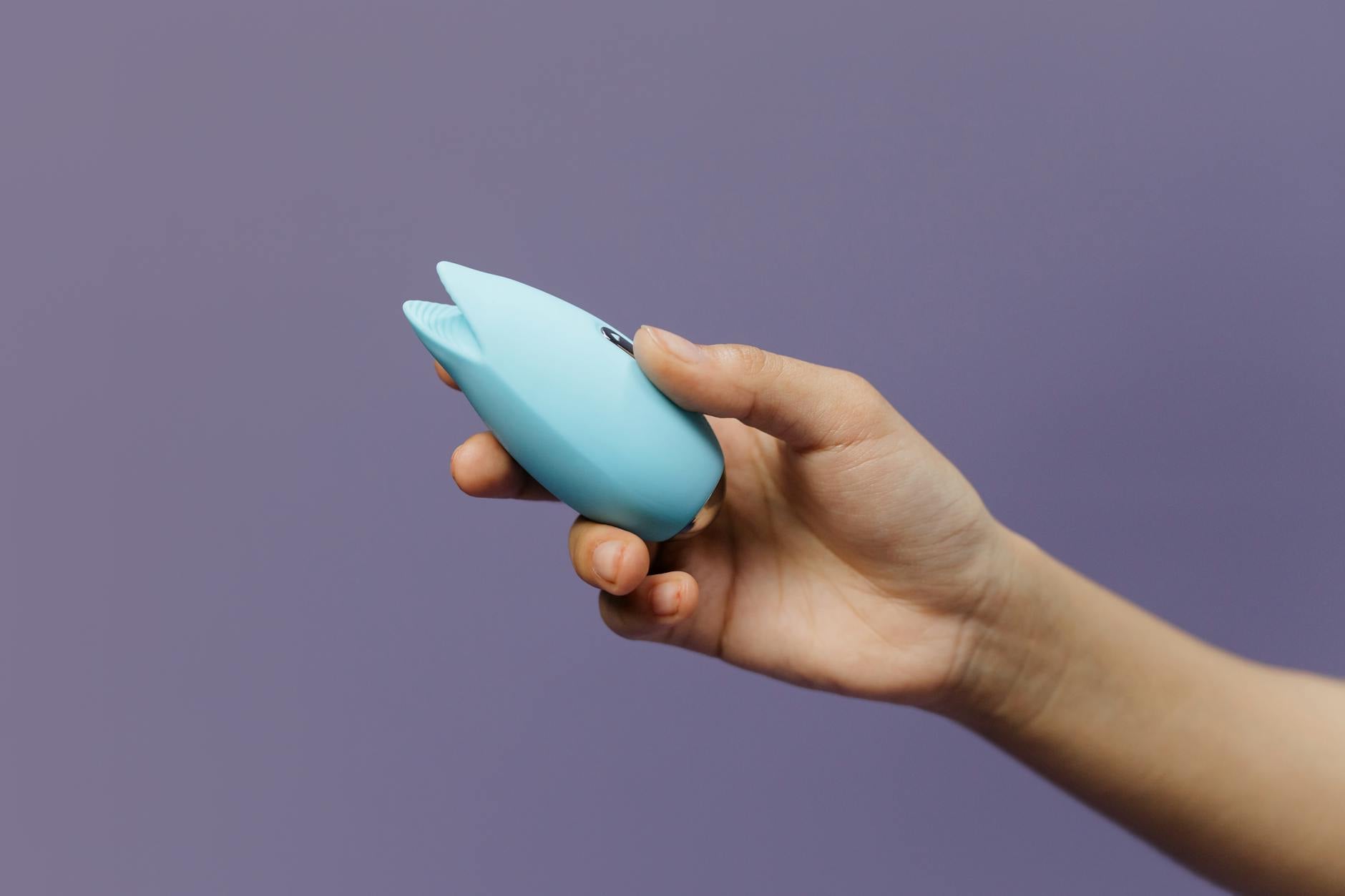
The comfort gap is real, and it's more common than you think
One of you wants to bring a lemon clitoral vibrator into your sex life. The other feels hesitant, skeptical, maybe even a little defensive. Here's what I've learned from years of working with couples on this exact friction point: the discomfort rarely comes from the toy itself. It usually comes from what the toy means to each partner, and those meanings can be wildly different.
The hesitant partner might worry it means they're not enough. The curious partner might feel rejected or unsupported. Both of you end up feeling hurt, and the vibrator becomes the symbol of that hurt instead of a tool for connection.
The good news? This is solvable. It's not even that hard if you're willing to have the real conversation instead of just talking around it.
What's actually driving the hesitation
Let me separate the myths from what's actually going on.
The hesitant partner sometimes worries that introducing toys signals failure. "If they need that, what does that mean about me?" Or they've internalized messages about toys being solo things, for people who don't have partners, which feels like a threat to the relationship. Or they grew up thinking of sex toys as weird or shameful, and that discomfort lingers even in adulthood.
The curious partner often interprets hesitation as rejection. "They don't want to explore with me." "They're not interested in my pleasure." "They're judging me for wanting this." What starts as a simple preference becomes loaded with emotional weight.
Neither of these stories is usually true. But they feel true in the moment, so you both act from hurt instead of curiosity.
The conversation that changes things
Start here: don't introduce the toy during sex. Have this talk clothed, calm, maybe over coffee. The goal isn't to convince anyone. It's to understand.
If you're the one who wants to explore, say this: "I've been thinking about trying lemon vibrators together. I want to be honest about why." Then say the real reason. Is it about wanting faster orgasms sometimes? More intense sensations? Taking pressure off you to provide everything? Variety? Boredom? Whatever it is, say it without apology.
Then listen to their response without defending. If they say "I feel like that's a sign you want someone else," don't jump to "That's ridiculous." Instead: "I hear that. That makes sense you'd feel that way. But here's what I actually mean: I want more pleasure with you, and I think this could help that happen." Different thing entirely.
If you're the hesitant one, let yourself say what you're actually afraid of, not the sanitized version. If it's "I don't want to feel replaced," say that. If it's "I grew up thinking toys were shameful and I still do, even though I'm trying to be cool about it," say that too.
What shifts when you use lemon vibrators together
Here's what I want the resistant partner to know: when you're both present and engaged with the toy, the experience is more intimate, not less. It's not the vibrator doing something to them while you watch. It's both of you collaborating toward one person's pleasure.
Start by just looking at it together. Sounds simple, but it helps desexualize the object and make it less scary. Let the hesitant partner hold it, feel the weight, understand it's just silicone, not some judgment device.
When you're ready to use it, the partner who's exploring can take the lead first. The other person's job is just to be present. They might kiss their partner while the vibrator's in use. They might hold it themselves. They might just watch and stay close. No performance required.
What often happens: the hesitant partner realizes this increases intimacy. They're seeing their partner vulnerable and pleased. They're participating in something their partner wanted. The whole dynamic softens.
Managing the speed bump when nervousness peaks
If midway through your first attempt together, the hesitant partner freezes up, here's what helps: pause everything. Not forever, just a beat. "What do you need right now?" Listen. Maybe they need to slow down. Maybe they need to talk. Maybe they need to not do this today and try again in a week.
Respecting the brake is what builds trust for the next time. Every time you honor "not yet" without resentment, you make "yes" more possible down the road.
For the curious partner, this is where patience becomes an act of love. You don't get what you want right now, but you're showing your partner that connection and their comfort matter more than your solo pleasure. That's the whole game, actually. That's how couples navigate the toy thing successfully.
The specific moves that work
When both of you are ready to actually use a lemon clitoral vibrator together, try this progression.
First session: the hesitant partner holds the toy and controls the vibration settings. This keeps them actively involved instead of passive. They decide the intensity, the duration, when to pause. They have all the power, literally and figuratively.
Second session: they start on lower patterns and the curious partner gives gentle feedback. "A little faster feels good," not instructions. Collaborative, not directive.
Third session: the hesitant partner can step back if they want, or lean in further. There's no script. You're both paying attention to what feels good for everyone.
What often surprises the hesitant partner: they get curious. Seeing their partner respond to different patterns, different angles, different timing. It's hot. It's involving. It's not what they feared.
When one of you still isn't ready
Some partners need more time. Some need professional support. Some need to explore on their own before partnered use feels safe.
Honestly? That's okay. When you're reconnecting with pleasure after a long break, sometimes solo exploration comes first. The same applies to comfort. The hesitant partner might need solo time with a lemon vibrator before using it with a partner, just to understand their own response without the pressure of someone watching.
If that's your situation, talk openly about it. "I'm not ready yet with you, but I'd like to explore this on my own first. That okay?" Most curious partners find that far less threatening than a flat "no forever." It's a yes with a timeline.
What doesn't work: one partner forcing the issue. "Come on, just try it." "You're being uptight." "Everyone else is doing this." Pressure doesn't build comfort. It builds resentment.
The real benefit you're after
Here's what I want you both to understand: the toy isn't the point. Connection is. If using lemon vibrators together pulls you closer, if it opens conversations you needed to have, if it helps you both feel seen and supported, then it's working.
If it creates tension and defensiveness, then it's not the right move for right now. And that's not a failure. That's information.
The couples who thrive with toys are the ones who treat them as a tool for collaboration, not as proof of anything. Not proof that one person cares more, or that the other isn't enough, or that the relationship needs fixing. Just a tool.
Talk first. Listen hard. Move slowly. Respect the brake. Pay attention to what brings you closer.
Do that, and the toy becomes almost beside the point. The connection is what stays.
People also ask
What if my partner thinks wanting to use lemon vibrators means I don't love them anymore?
This fear is almost always about what they believe the toy means, not about the toy itself. Have an explicit conversation: "I want to be clear. This isn't about you not being enough. It's about exploring a new sensation together." Then show them, not just with words. Use the vibrator together. Include them. Let them see that pleasure with a toy doesn't replace pleasure with them. It adds to it.
How do I introduce the idea without sounding like I'm criticizing their performance?
Frame it around curiosity and variety, not around a gap. "I've been thinking about trying something new together" lands differently than "I need more from you." You're not fixing anything. You're exploring. Big difference in how it lands.
Can the hesitant partner feel pressured if I've already bought a lemon clitoral vibrator?
Yes, absolutely. Showing up with a vibrator already in hand can feel like you've already decided, which puts the hesitant partner in a defensive position. Have the conversation first. If they're interested, explore options together. Let them feel agency in the choice. When you're choosing a lemon vibrator for the first time, making that choice together can actually be bonding.
What if we try it and they hate it? Is that the end of it?
One bad first experience isn't forever. Sometimes the hesitant partner needs to adjust their expectations, relax a little, or try again in a different context. Sometimes they genuinely don't like it and that's valid. The goal isn't to force a thing to work. The goal is to find out together what does work. If lemon vibrators aren't it, something else might be. Or nothing might be, and that's okay too.
How long should I give it before assuming they'll never be comfortable?
I usually say give it a few months of genuine openness, not pressure. That means you've had the real conversation, you've moved slowly, and you've actually tried a time or two without judgment. If after that the hesitant partner is still shut down, it's time to work with someone (a couples therapist, a sex educator) to understand what's underneath. Sometimes there's trauma, sometimes it's values clash, sometimes it's just incompatibility on this one thing. An outside perspective helps clarify that.
Can we use lemon sexual toys if my partner still won't try but I want to?
Yes. Solo pleasure is separate from partnered pleasure. If your partner isn't ready to explore toys together, that doesn't mean you can't explore them alone. That said, it's worth asking yourself if there's a conversation underneath this dynamic that needs to happen. When your partner doesn't know about your solo pleasure, that's a different dynamic worth addressing.
The path forward
Different comfort levels with lemon vibrators and toys don't have to be relationship friction points. They're actually opportunities to practice what real partnership looks like: listening, respecting boundaries, moving together even when you're not on the same timeline.
Start with conversation. Listen for what they're actually afraid of, not just the surface objection. Show them through action that the toy is about connection, not replacement. Move slowly. Respect the brake. And remember that building comfort together takes time and patience.
If you get stuck, that's what professionals are for. A couples therapist or sex educator can help you both understand what's underneath the hesitation and what you both actually want.
Your sex life doesn't have to look like anyone else's. It just has to work for both of you. If that means lemon clitoral vibrators are part of it, great. If it means you explore something else, great too.
The real pleasure comes from feeling safe enough to want things, and trusted enough to ask for them.
Ready to move forward together? Start with the conversation.