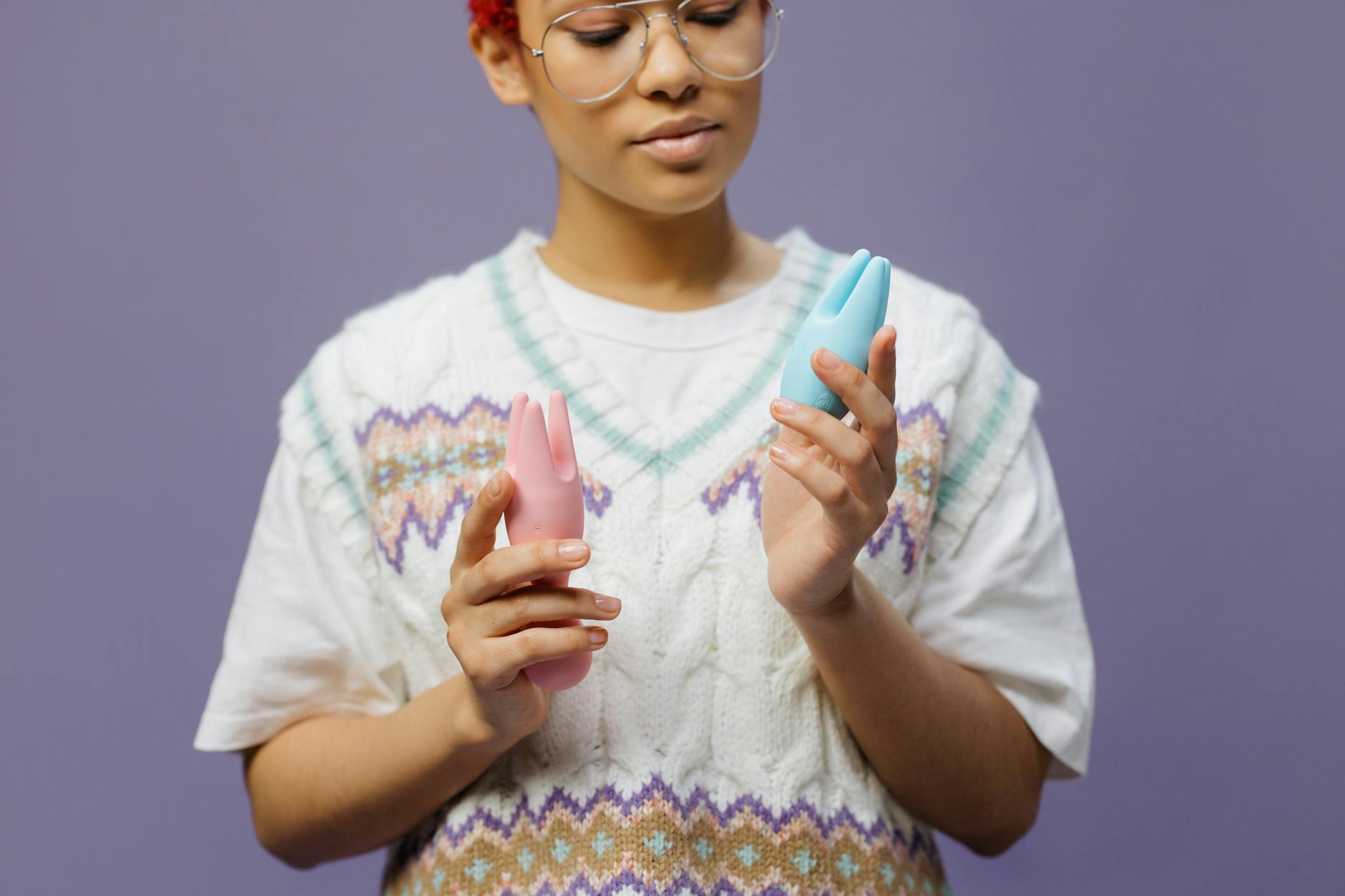
Let's talk about the arousal disconnect
Trying to conceive rewires your relationship with sex in ways nobody warns you about. What used to be spontaneous and fun becomes a project. Apps track your cycle. Sex happens on a schedule. Your body becomes a mechanism for making a baby instead of a source of pleasure for you.
The result: arousal tanks. Even when you want to want it, your nervous system doesn't cooperate. This is normal. It's also incredibly frustrating, and it's one of the biggest intimacy stressors couples face during fertility journeys.
Here's the thing that changes everything: using lemon vibrators or other clitoral vibrators during this phase isn't about "getting in the mood" on command. It's about separating your pleasure from the outcome. It's about remembering that sex can still be about you.
Why conception planning kills arousal
Three things happen neurologically when you're trying to conceive. First, anticipation becomes pressure. Your brain knows the stakes. That cortisol spike dampens dopamine and makes arousal harder to access. Second, the performance element intensifies. Sex now has a job. When sex has a job, pleasure gets demoted.
Third, the power dynamic shifts, even in the most egalitarian relationships. Usually the partner with the uterus is tracking, planning, and managing the timeline. That role creep into sex makes it harder to relax into genuine desire.
Meanwhile, your body might also be responding to hormonal changes from supplements, medications, or cycle tracking. Luteal phase arousal feels different than follicular phase arousal. If you don't know what you're looking for, you might interpret normal variation as a problem.
What lemon vibrators do that scheduled sex doesn't
Lemon clitoral vibrators like the suction-style vibrators break the cycle by reintroducing sensation without outcome pressure. Here's why they work during conception cycles.
Air-suction stimulation bypasses performance anxiety. These vibrators don't require you to "do" anything. You don't have to prove you're aroused. The vibrator does the work. Your only job is to feel. That alone shifts you out of performance mode and into sensation mode.
They work faster than partnered sex. When arousal is hard to access, speed matters. Lemon vibrators typically generate orgasm in 2-5 minutes if you're at all receptive. That means you can experience pleasure even on days when your arousal is sluggish. You're not lying there waiting for something that might not come.
Pleasure becomes decoupled from conception. This is the secret. When you have an orgasm from a lemon clitoral vibrator solo, it's just yours. No conception agenda attached. No performance element. No ovulation narrative. It's pure sensation. That reframing helps your nervous system reset.
How to use lemon vibrators during your fertile window
The fertile window is when you're most likely to feel touched-out and resentful about sex. This is when solo pleasure with a clitoral vibrator matters most.
Before partnered sex: Use a lemon vibrator on yourself 30 minutes before you're planning to have sex with your partner. Bring yourself to orgasm or close to it. This does two things. It primes your nervous system for arousal, and it separates the pleasure that's just for you from the sex that has a conception function. You've already had your moment. Now the partnered sex can be about connection, not proving you're capable of pleasure.
Instead of partnered sex, sometimes: There's no rule that says every fertile-window sex session has to include your partner. Some cycles, you might be exhausted or touched-out. Use a lemon vibrator solo. Have your orgasm. Then if you want to have partnered sex afterward, do it. If not, you've still been intimate with your own body. That counts.
On non-fertile days: This is when you should absolutely prioritize your own pleasure with clitoral vibrators. The pressure is off. You can feel desire without the conception agenda. When you're not tracking, not ovulating, not managing the timeline, sex becomes play again. Lemon vibrators help you actually experience that shift.
The communication piece matters
If you're in a partnership, your partner needs to understand what you're doing and why. This isn't about them being replaced. It's about you maintaining your own pleasure life so that partnered sex doesn't become transactional.
The conversation sounds like: "I want to use my vibrator during the fertile window because I notice my arousal gets tanked by the pressure. If I have my own orgasm first, I feel less resentful and more present with you." Most partners get it immediately because it actually improves the sex you do have together.
If your partner feels threatened, there's a bigger conversation happening about what sex means to both of you during this phase. That's worth working through with a couples therapist if the tension persists. Conception planning already stresses relationships enough without adding shame about solo pleasure.
The longer-arc perspective
Trying to conceive is temporary. Hopefully it ends in pregnancy. Even if it takes longer than expected, eventually it shifts. The habits you build now about protecting your pleasure during high-pressure phases will serve you for decades.
Learning to access orgasm quickly with a clitoral vibrator, to separate your pleasure from partnership outcomes, and to prioritize your nervous system's recovery from stress. These are skills that outlast the fertility phase. They make you a better partner, a more resilient person, and someone who knows how to reclaim your body when it's been colonized by other agendas.
Lemon vibrators aren't a fertility hack. They're a pleasure-protection tool during a season when pleasure gets overshadowed. Use them that way.
Common questions about pleasure and conception
Can orgasms help you conceive?
The research is mixed. Some studies suggest that orgasms during or after partnered sex might create uterine contractions that help sperm move upward. Other studies find no significant difference. The honest answer: orgasms don't hurt fertility, but they're not a magic bullet. More importantly, if you're only having orgasms because you think they'll help you conceive, you've lost the whole point of pleasure. Your orgasms should feel good, not like another fertility task.
Does using a vibrator during conception tracking affect my cycle data?
No. Your cycle is determined by your hormones, not by how you have orgasms. Tracking with a vibrator won't change your temperature, cervical mucus, or ovulation timing. If anything, the stress reduction from regular pleasure might stabilize your cycle slightly, but that's a bonus, not the mechanism.
Should I tell my doctor I'm using vibrators while trying to conceive?
Yes, if it comes up, or if you're working with a fertility specialist. There's zero medical reason to avoid vibrators during the conception journey. Some doctors will ask about your general sexual function as part of fertility assessment. The honest answer includes solo pleasure.
What if I still can't orgasm even with a lemon vibrator during my fertile window?
That's okay. The goal isn't to force an orgasm. The goal is to reconnect with sensation and pleasure outside the conception framework. If a vibrator doesn't work for you, solo sex with your hands might feel better. Or you might need to sit with a therapist about the anxiety that's blocking arousal. The vibrator is a tool, not a requirement.
Can my partner use a lemon vibrator on me instead?
Absolutely, if that feels good. The main thing is that it should feel good, not like another obligation. If your partner using a vibrator on you still feels like part of the "we need to make a baby" agenda, it might not help. But if it feels like genuine intimacy, that changes everything.
Does the type of lemon vibrator matter for conception cycles?
Quick vibrators that deliver strong stimulation tend to work better during high-stress periods because they require less effort from you. Suction-style clitoral vibrators like the Lemon nancy vibrator are particularly useful because you can settle in and let the device do the work. No performance, no guessing if you're doing it right. Just sensation.
The bottom line
Trying to conceive changes your relationship with sex. That's a fact you can't avoid. But you can protect your pleasure by keeping solo sex sacred. Use lemon vibrators to remind your nervous system that arousal is still possible, that your body still belongs to you, and that pleasure is separate from outcomes. Your nervous system will thank you. Your partnership will thank you. And when conception finally happens, you'll still remember what pleasure feels like.
If you're struggling with arousal or intimacy during your conception journey, talking to a professional can help. Reach out to our team at Lemon Nancy Shop if you have questions about what tools might work best for you.