Let's be honest about this one
You can orgasm solo. You can feel arousal building, you know exactly what you need, and your body responds. Then your partner gets in the room and your nervous system slams the door shut. Suddenly you're in your head, thinking about how long this is taking, whether you're being sexy enough, if they're getting bored. Your body just checked out.
This isn't a problem with your desire. It's not a problem with your partner (usually). It's a window into how your nervous system handles being watched, and honestly, it's wildly common. The fix isn't willpower or reassurance. It's tools that help you stay in your body instead of floating up into performance mode.
Why your nervous system freaks out when someone's watching
Your parasympathetic nervous system (the "rest and digest" branch that lets orgasm happen) and your sympathetic nervous system (fight or flight) are rivals. When you're alone, parasympathetic wins. You're safe, you know what feels good, there's no judgment. When a partner is present, your brain scans for threat. Are they evaluating you? Are you taking too long? What if you can't come? Boom. Sympathetic nervous system floods your system with cortisol and adrenaline. Arousal tanks. Orgasm becomes impossible.
It's not weakness. It's neurobiology.
Why lemon vibrators change the equation
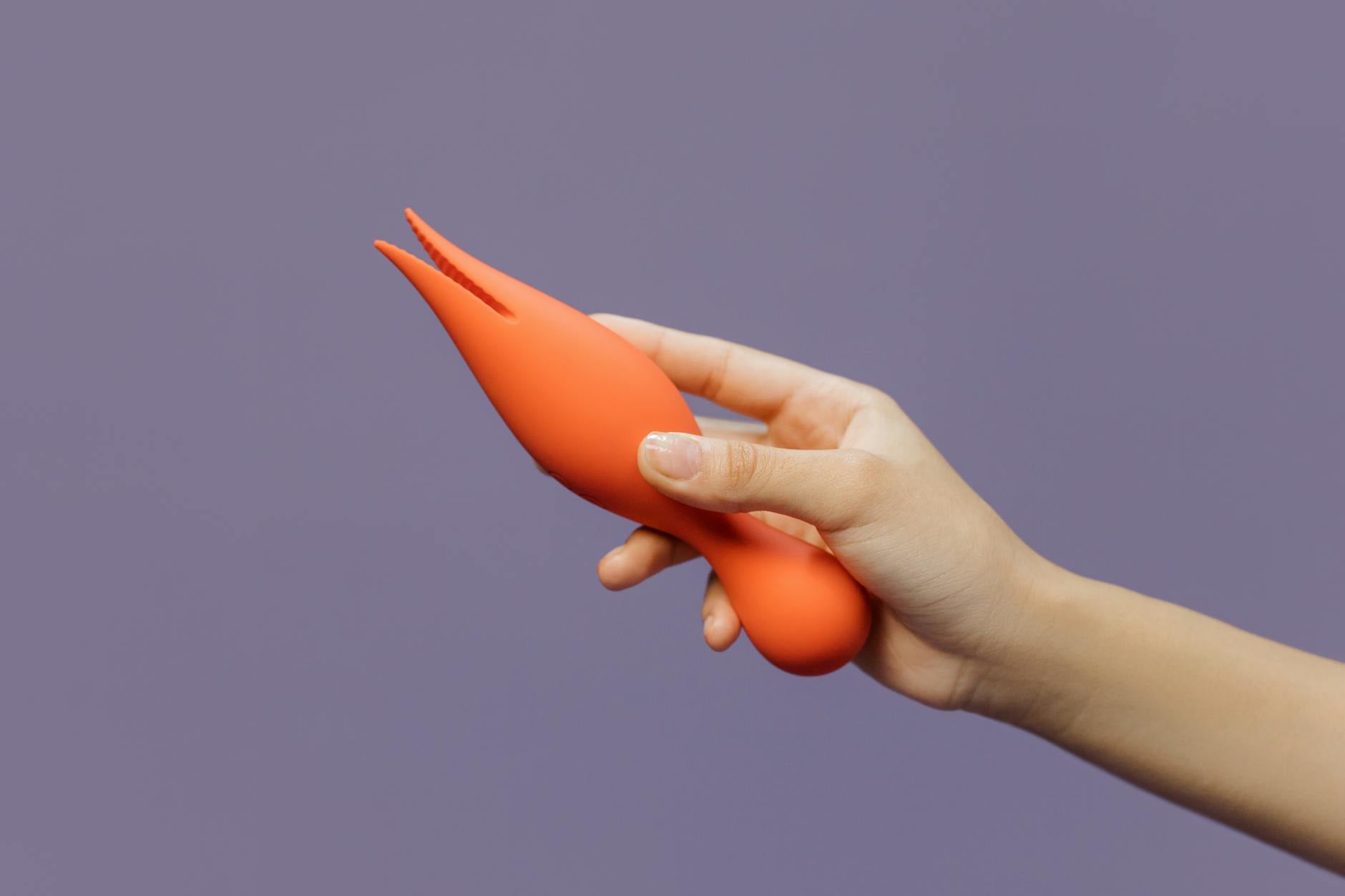
Lemon clitoral vibrators, especially air-suction models like the Lem, work differently than vibration alone. They create intense, focused stimulation that essentially floods your nervous system with pleasure signals. Your brain gets so much input that it stops running the performance anxiety loop.
Think of it like this: your anxious thoughts are running on a loop at moderate volume. A regular vibrator adds stimulation, but there's still bandwidth for the anxiety to play underneath. Air-suction stimulation turns the pleasure signal up to eleven. It fills all the available bandwidth.
The other piece is control. When you use a lemon vibrator with your partner present, you're the one holding the device, the one deciding intensity, the one steering the experience. That reclaims agency. You're not waiting for your partner to do the right thing. You're actively creating your own pleasure.
The practical setup that actually works
You can't think your way out of a nervous system response. You have to design your environment differently.
First, reframe the role. Tell your partner explicitly: "I'm going to use a lemon vibrator because it helps me get out of my head. This isn't about you not being enough. It's about me needing this tool to relax." This one conversation prevents them from interpreting it as rejection.
Second, position matters. Many people find it easier to start with positions where they're not making direct eye contact. Side-by-side, you entering from behind with the vibrator in front, or you on top looking down (not at their face) gives your nervous system a little less surveillance. If missionary with eye contact is your default, that might be triggering the anxiety in the first place. Try a different arrangement.
Third, control the intensity ramp. Start with the lemon vibrator on the lowest setting before your partner is even involved. Use it solo for 5 minutes while they're in the room but not touching you. This primes your parasympathetic nervous system. Once you're already aroused and settled, bringing your partner in is less jarring.
Fourth, talk during, not after. If you feel anxiety creeping in mid-experience, pause. Tell your partner what you need: "I need you to just hold me for a second," or "Can you look away for a minute," or "Let's slow down." Most partners will do this. The fact that you can ask is itself nervous system regulation.
The lemon vibrator advantage when performance anxiety is high
Lemon clitoral vibrators excel here for three reasons:
They work fast. Air-suction stimulation (like the Lem) can take 3-8 minutes to orgasm for many people. That's fast enough that you don't spiral, but long enough to feel genuine arousal building, not just mechanical response.
They're predictable. Once you know your preferred pattern and intensity, a lemon vibrator delivers exactly the same sensation every time. Your body learns to trust it. That predictability is calming when everything else (your partner's mood, the pressure you're putting on yourself) feels uncertain.
They give you a job. Holding and positioning the vibrator keeps your hands and attention occupied. You're not lying there trying not to think. You're actively doing something. That subtle shift from passive to active is massive for anxiety.
What to do if anxiety still shows up
Sometimes even with all the right tools, your nervous system needs more time. This doesn't mean the lemon vibrator isn't working. It means your parasympathetic nervous system needs conditioning.
Start with solo sessions first. Spend 2-3 weeks using the lemon vibrator alone, focusing purely on sensation and pleasure. No goal of orgasm. Just noticing what feels good. This reinforces the pathway between stimulation and relaxation.
Then introduce your partner gradually. First time: they're in a different room, using headphones. Second time: they're in the same room but reading or on their phone. Third time: they're present and touching you, but you have the vibrator. Fourth time: they can offer suggestions, but you're still driving.
You're not building up to some final state where anxiety vanishes. You're building up your nervous system's capacity to stay relaxed under slight increases of social pressure. That takes time.
Consider whether you need other things too. If anxiety around your partner's presence is intense across the board (not just sexual), talking to a couples therapist might help. Sometimes performance anxiety in bed is actually pointing to something bigger about safety or trust in the relationship.
The partner perspective that helps
If your partner understands what's happening (not just what they see), they can help.
Most partners think: "She needs a vibrator means I'm not doing enough." What you need them to think is: "She needs a vibrator to stay relaxed, and a relaxed partner is way hotter than an anxious one."
The best partners are the ones who can see you using a lemon vibrator and feel turned on because they know they're about to have sex with a partner who's actually present, not performing. They're not watching your body. They're watching you give yourself pleasure. That's a whole different dynamic, and most people find it incredibly hot.
When to know this is working
You're making progress when:
- You can stay present longer before anxiety kicks in
- You actually have an orgasm some of the time (not every time, some of the time)
- You can ask your partner for what you need without shame
- Your partner stops interpreting the vibrator as replacement and starts seeing it as tool
- You stop narrating what's happening to yourself and just feel it
None of this happens overnight. Nervous system rewiring takes weeks. Be patient with yourself. Your body isn't broken. It's protecting you from perceived threat. Once it learns that being pleasured in front of your partner is safe, the anxiety will quiet down.
FAQ
Why does my body tense up even when I want to relax?
Tension under observation is a somatic response, not a choice. Your nervous system has learned that being watched = threat, so it triggers the sympathetic response automatically. You can't think your way out, but you can gradually retrain it. Lemon clitoral vibrators help because they overwhelm the anxiety signal with pleasure, giving your system a chance to rewire what "being watched" means.
Can I use a lemon vibrator if I've never been able to orgasm with a partner before?
Absolutely. In fact, this is an ideal use case. A lemon vibrator gives you a pattern and intensity you control, which means you're not relying on your partner to figure out what works. Many people who've never orgasmed with a partner discover they can using a vibrator because the nervous system component shifts.
Does using a vibrator with my partner mean we're broken somehow?
No. Using a vibrator is partnered sex. Plenty of couples who have zero anxiety still incorporate vibrators because they feel amazing. The fact that you need one due to anxiety doesn't mean your relationship is struggling. It means you're being intentional about pleasure.
What if my partner feels rejected when I suggest using a lemon vibrator?
This is a conversation issue, not a vibrator issue. You might say: "I want to include this because it helps me relax enough to actually enjoy sex. Anxiety shuts me down. A vibrator helps me get out of my head. That's not about you, it's about my nervous system." If they're still defensive, that's worth exploring separately. Good partners want you to feel good.
How long does it take for performance anxiety to get better?
It depends on how conditioned the response is. If this started recently, 3-4 weeks of consistent practice (solo first, then partnered) can make a real difference. If you've had performance anxiety for years, give yourself 8-12 weeks. You're literally rewiring a nervous system pattern. That's slower than you'd like, but faster than you might think.
Is there something else I should try if the vibrator alone isn't enough?
Yes. Look at your wider nervous system health. Are you sleeping enough? Managing stress? If you're running on cortisol and caffeine, your parasympathetic system is already offline. Breathing exercises before sex (4-count in, 6-count out), exercise earlier in the day, and cutting back on stimulants can all help. If anxiety is severe, therapy is worth it. You're not broken. You're just dealing with something real.
The truth underneath this
Performance anxiety isn't about the sex itself. It's about feeling safe enough to be present. A lemon vibrator is a tool that helps your nervous system learn that pleasure with a witness is possible. That's the real win. Once your body knows it, anxiety loses its grip.
If you're ready to start, the Lemon Nancy Shop has everything you need to explore this. The work, though, is the internal rewiring. That's on you. But you don't have to do it alone, and you don't have to white-knuckle your way through. The right tools and a little patience go a long way.
Have questions about how to use lemon vibrators or how to talk to your partner about this? Get in touch. We're here to help.