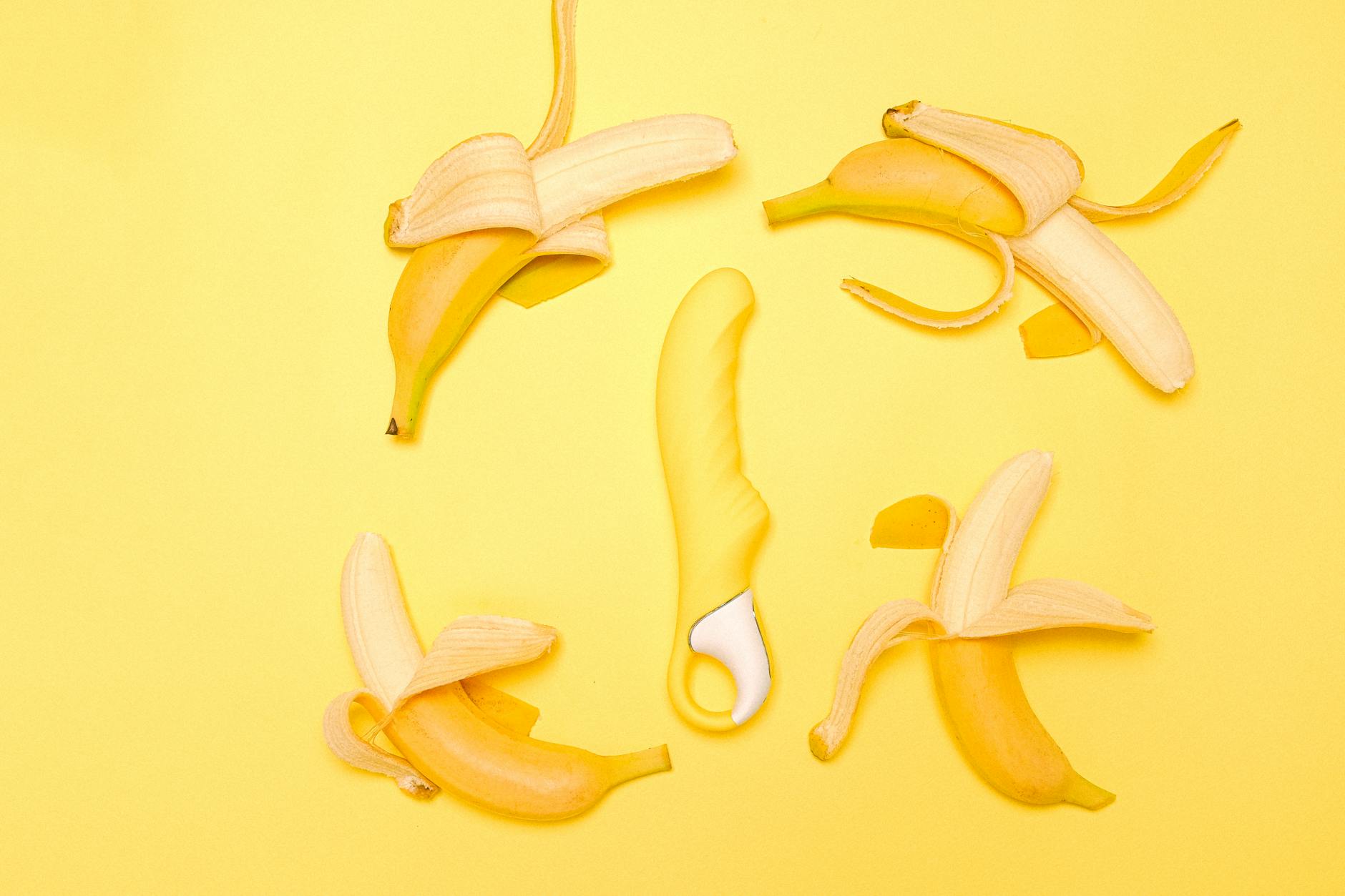
The orgasm trap nobody warns you about
Let's be real. If I had to pick the single most common pleasure killer I see in my practice, it's this: the moment sex or solo time becomes about achieving an outcome instead of feeling something, the body checks out.
You've probably felt it. That tightening in your chest. The mental chatter. Your partner (or yourself) waiting for the moment, and suddenly you're performing instead of present. With a lemon vibrator in hand, that pressure can actually amplify because the device is designed to work so effectively that there's this unspoken expectation it should always deliver.
It shouldn't have to work that way.
Why the pressure exists (and it's not your fault)
There are three forces colliding here, and none of them are about your actual body.
First, there's cultural messaging. Orgasm has been packaged as the finish line of sex for decades. Movies end with them. Magazines promise techniques to achieve them. Your partner might believe that good sex equals your orgasm. That load is heavy, and it's not accurate.
Second, there's a real physiological trap. When you're goal-focused, your nervous system shifts into sympathetic activation. That's the fight-or-flight response. Your body literally cannot be aroused and in fight-or-flight at the same time. It's neurologically impossible. So the more you chase the orgasm, the more your nervous system clamps down. The more it clamps down, the further the orgasm goes.
Third, if you've had partners who made you feel like your pleasure was conditional on your ability to orgasm quickly or easily, that message lives in your body. It's not a conscious belief. It's a nervous system memory.
The lemon vibrator reframe
Here's where tools like the lemon clitoral vibrator become genuinely useful. Not because they're magic (they're not), but because they give you permission to rebuild the relationship with pleasure on different terms.
A lemon sucker or clitoral vibrator is efficient. It works. And that efficiency can actually be your permission slip to stop trying so hard.
Instead of using it as a tool to reach an outcome, use it as a tool to explore sensation. There's a massive difference. One is goal-oriented. The other is process-oriented.
When you pick up a lemon vibrator with the intention of "let me see what feels good" instead of "let me make this happen," three things shift immediately. Your nervous system downshifts into parasympathetic activation (rest and digest, where arousal actually lives). Your attention moves to physical sensation instead of mental performance. And paradoxically, orgasms usually become easier when you stop demanding them.
The settings that work with your nervous system
Most people reach for the highest intensity and pattern immediately. That's the performance mindset again. You're trying to force the outcome.
Instead, start at the lowest setting. Not because you need to warm up (though you might), but because low intensity invites curiosity instead of demand. You're asking "what does this feel like" instead of "will this get me there."
Patterns matter more than intensity when you're releasing performance pressure. The Lemon Nancy Shop lemon clitoral vibrators offer various patterns because sensation diversity is what keeps your nervous system engaged and present. A pattern that feels boring at first often becomes compelling when you stop watching for results.
Spend time in the lower patterns. Let your attention follow the sensation. If you find yourself getting distracted or thinking about whether it's working, that's not failure. That's information. It means your nervous system is still in sympathetic activation. Pause. Breathe. Reset the intention.
The solo timing that actually helps
If you've been timing yourself or pressuring yourself into "having to" finish, stop.
Instead, set a window. "I'm giving myself 20 minutes of solo time to explore sensation." Then let the outcome be whatever it is. Some days that's an orgasm. Some days it's relaxation. Some days it's just noticing that your body feels different than it did last week.
All of those are wins.
One specific practice that helps release outcome focus: try the lemon vibrator with zero expectation of orgasm. Use it purely to notice. Notice where your body is most sensitive. Notice how the sensation changes when you breathe into it. Notice whether certain patterns feel better on different days. Notice your nervous system learning to settle.
Most people who do this for three or four solo sessions find that orgasms actually return more naturally when they're not the point anymore.
The partner conversation (if there is one)
If you have a partner and this pressure is coming partly from them, that's a separate conversation from the solo work you're doing.
The conversation isn't about the lemon vibrator. It's about pleasure itself. It's worth saying something like: "My body works differently than I thought. Orgasm isn't a switch. Sometimes I'm present and satisfied without one. I need us to expand what counts as good sex."
That might feel vulnerable to say. Say it anyway.
Some partners need education. Some need permission to release their own performance anxiety (which is often why they're focused on your outcome). Some need to hear that you're not rejecting them. You're actually inviting them into a more honest experience.
The lemon clitoral vibrators can absolutely be part of partnered sex. But if the pressure is coming from that dynamic, the solo work comes first. You need to remember what pleasure feels like when there's no audience, no timeline, no outcome to prove.
The nervous system reset that changes everything
Here's the thing about pressure and arousal. Pressure lives in the sympathetic nervous system. Arousal lives in the parasympathetic. They can't both be active at the same time.
So the actual work isn't about the lemon vibrator getting better at its job. It's about your nervous system learning to settle into presence instead of performance.
One tool for this: before you even pick up the vibrator, spend two minutes on grounding. Feel your feet on the ground. Notice the weight of your body on the surface you're on. Take three slow breaths. This literally activates parasympathetic tone.
Then use the vibrator from that state instead of from the state of expectation.
You'll notice the difference immediately. The sensation feels different. Your mind is quieter. Your body is actually available.
When to seek support
If you've been in a pattern of pressure around orgasm for years, sometimes professional support helps. A therapist who works with sexual health (not a sex therapist lecturing you on techniques, but someone who understands nervous system dynamics) can help you identify where the pressure really lives.
It's often not actually about the orgasm. It's about control, or worth, or fear of rejection, or echoes of past experiences. The vibrator can't fix those. But once you see them clearly, they often soften.
The pleasure you deserve isn't a performance
Your body is not a machine that should produce output on command. It's a nervous system that responds to safety, presence, and permission.
A lemon vibrator is a tool for pleasure, not a tool for proving something. Use it when you want to explore. Use it to notice. Use it to rediscover what actually feels good instead of what you think should feel good.
The paradox is real: when you stop chasing the orgasm, it usually shows up. When you stop performing, your body usually responds. When you give yourself permission to just feel, you often end up feeling everything.
That's not magic. That's just what happens when your nervous system finally trusts that you're safe enough to be present.
FAQs
Why does pressure kill arousal so effectively?
Your nervous system has two main modes: sympathetic (fight-or-flight, where you tense and scan for threats) and parasympathetic (rest-and-digest, where you relax and arousal lives). When you're pressuring yourself to orgasm, you're activating sympathetic tone. Your body literally cannot be in both states at once. It's not willpower or technique that fixes this. It's permission and presence. A lemon vibrator works better when you're parasympathetically activated, which is why the mindset shift matters more than the intensity.
Can I use a lemon clitoral vibrator with the goal of an orgasm, or does that ruin it?
You can, but the frame matters enormously. There's a difference between "I'd like to see if an orgasm comes" (curious, open-ended) and "I have to make this happen" (pressured, outcome-focused). The former usually works. The latter usually doesn't. If you notice yourself slipping into performance mode, pause and reset the intention. Your body will feel the difference.
How long until the pressure pattern actually shifts?
It varies. Some people notice a shift in their first session once they change the intention. Others need two or three weeks of consistent solo time to genuinely release the pattern. The nervous system is trainable, but it doesn't retrain itself overnight. The key is consistency and gentleness with yourself. You're not forcing anything. You're just practicing a different approach.
What if I use a lemon vibrator and still feel pressure?
That's your cue that the pressure is deeper than the solo session. It might be worth exploring with a therapist. Sometimes the pressure around orgasm is actually about control, or safety, or old messages from partners or family about what your body should do. A vibrator can't address that. But once you see what the pressure actually is, it often becomes something you can work with. That's also when the vibrator becomes genuinely useful.
Is it normal to not want an orgasm sometimes?
Completely. Your body and arousal fluctuate. Sometimes you want deep sensation without climax. Sometimes you want relaxation. Sometimes you want to be present with a partner without any outcome at all. All of these are normal and healthy. If you've been trained to believe that sex without orgasm is incomplete, unlearn that. Your pleasure is valid regardless of the ending.
How do I talk to my partner about this if they're focused on my orgasm?
Start outside the bedroom. Something like: "I've realized that when we focus on whether I orgasm, my body actually tenses up. I'd like us to explore what feels good without that being the measure of success." Some partners need permission to release their own performance anxiety. Some need education. Some need to hear that you're still attracted to them, you're just inviting a different experience. Be patient, but also be clear. Your pleasure matters, and so does a truly mutual experience.
Sources and further reading
For more on nervous system activation and arousal, research by Dr. Emily Nagoski ("Come As You Are") explores how the dual control model of sexual response helps explain why pressure actually inhibits arousal. For relationship-based pressure, Gottman Method research highlights how performance-focused sex often decreases intimacy, while pleasure-focused sex strengthens it.
If you're exploring how to use lemon vibrators with different mindsets, check out our guides on how to use lemon vibrators when sensation feels overstimulated and how to use lemon vibrators when anxiety interferes with arousal for complementary nervous system approaches.
For deeper support on relationship dynamics around sex and pleasure, reach out to our contact page to find recommendations for therapists who specialize in sexual health and nervous system work.