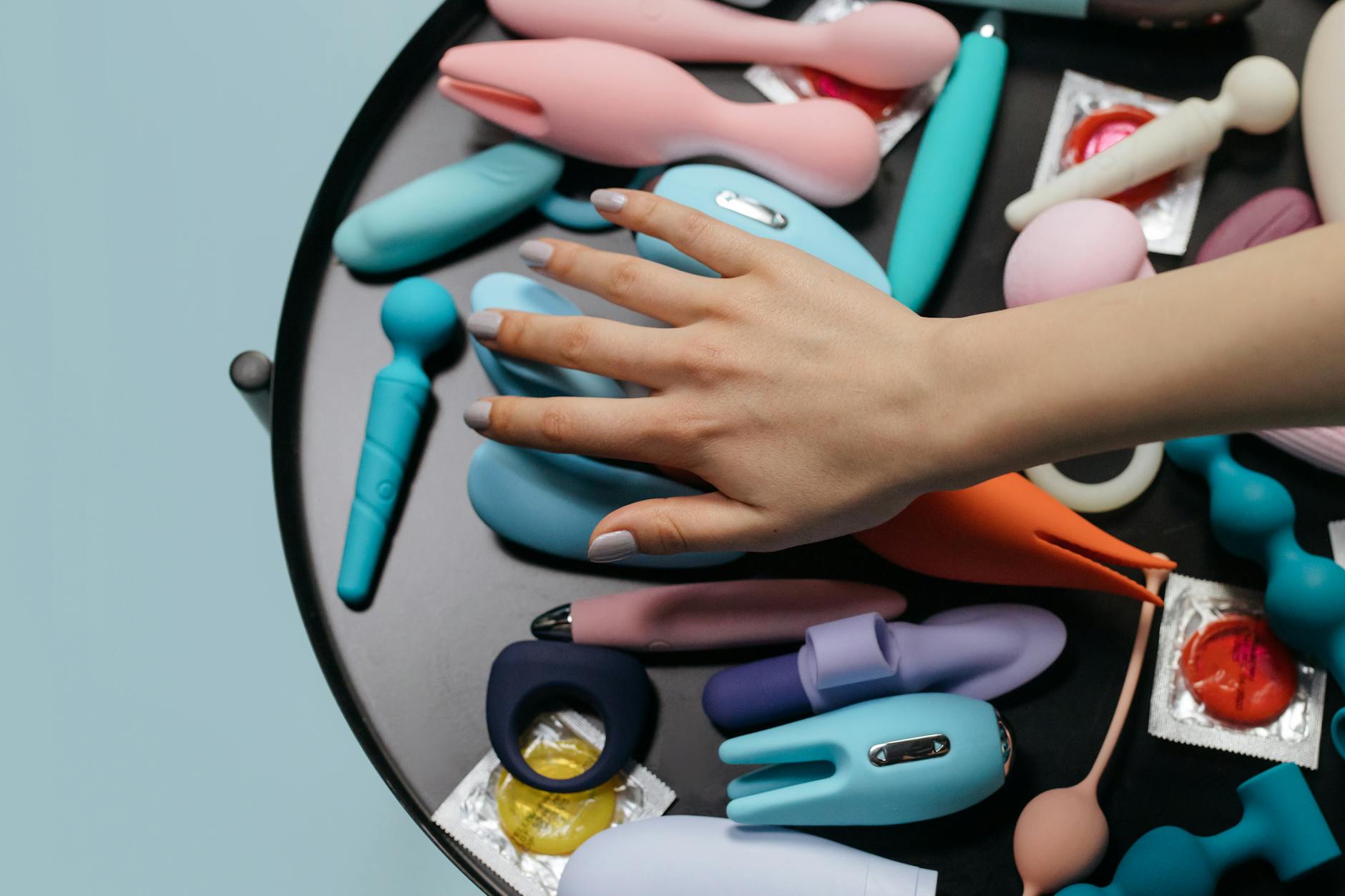
Let's start with what nobody tells you
Arousal doesn't stop working after 40. It just operates on a different timeline. Most people interpret this as a problem, but it's actually just a shift. Your body is asking for something different, and that's worth understanding before you assume anything's wrong.
Here's the honest part. When I work with people in their 40s and beyond, the most common complaint isn't "I can't get aroused anymore." It's "it takes forever." That's a completely different issue, and it has solutions that actually work.
Why arousal gets slower (it's not what you think)
Everyone's familiar with the obvious culprits: hormonal changes, decreased blood flow, life stress, medication side effects. All of that's real. But there's a quieter reason that deserves attention.
Your nervous system isn't as reactive anymore. In your 20s and 30s, your sympathetic nervous system fires at the sight of something attractive or the anticipation of sex. That quick jolt of adrenaline and dopamine is what makes arousal feel instant and intense. After 40, that system becomes more conservative. It takes longer to flip the switch from rest mode to pleasure mode.
That's not degradation. That's maturity. Your nervous system is now asking for more context, more safety, more intentionality before it agrees to dial up.
Clitoral sensitivity also changes subtly. The tissue remains responsive, but the speed of response slows. What used to spark immediately now needs sustained, rhythmic input. This is where most manual techniques fail. Your hand can't maintain perfect consistency for 20 minutes. A lemon clitoral vibrator can.
The arousal gap and why it matters
There's a useful concept in relationship therapy called the "arousal gap." It's the gap between when desire starts and when the body catches up. After 40, that gap widens. For some people, it's 5 minutes longer. For others, it's 15 or 20.
If you're partnered, this gap creates friction. One person is ready, the other's body is still warming up. The partner waiting feels rejected. The person still warming up feels pressured. Neither experience is good.
A lemon vibrator collapses that gap. You don't have to wait for manual stimulation to build momentum. Suction-based vibrators like Lemon clitoral vibrators provide immediate, consistent sensory input that your nervous system recognizes and responds to. It's not cheating. It's bridging a biological reality.
How lemon vibrators work differently on a slower-burning body
Most vibrators work through direct friction. Your hand applies pressure and speed. The lemon vibrator works through suction and gentle pulsing. This matters because slow-burning arousal isn't a friction problem. It's a stimulation problem.
When arousal is sluggish, what you actually need is:
Sustained, non-varying stimulus. Your nervous system is cautious. It wants proof that the pleasure is safe and consistent. A vibrator set to pattern 2 or 3 tells your system, "This is going to stay steady. You can relax into it." Your hand rhythm, even if you're trying your hardest, varies slightly. Your breathing changes, your pressure drifts. Your body registers those micro-variations as uncertainty.
Deeper stimulation. Suction reaches nerve endings that surface friction alone doesn't activate. If your clitoral sensitivity has shifted after 40, suction-based tools access different neural pathways. It's not more intense. It's more complete.
The freedom to relax. When you're manually stimulating yourself, you're working. There's effort. Your pelvic floor braces slightly in anticipation. After 40, that bracing actually slows arousal. A lemon vibrator lets your body go fully passive, which paradoxically speeds the warm-up.
The practical timeline shift
If manual stimulation used to get you to arousal in 5 minutes at 30, don't be shocked if it takes 15 at 45. That's normal. But here's what I've observed clinically.
When someone switches to a lemon clitoral vibrator after years of manual techniques, the timeline doesn't just stay the same. It often contracts. Not because the vibrator is "better." But because your body doesn't have to work as hard to recognize and respond to sustained input.
Start with lower intensity settings. I recommend patterns 1 through 3 for most people after 40. Your nervous system is more sensitive to overstimulation now, even if baseline sensitivity has decreased. That sounds backwards. It's not. You need less aggressive input to wake things up, even though the waking-up process takes longer overall.
What actually supports slower arousal
Four things matter more than the tool itself.
Time expectation. Budget 20 to 30 minutes minimum if you're using a lemon vibrator. This isn't because you're slow. It's because your body wants permission to take its time. The moment you stop clock-watching, the faster you'll get there. Promise yourself the time and you'll be surprised how much that paradoxically speeds arousal.
Mental space. After 40, your brain is busier. You're managing work, family, finances, health. During arousal, you have to actively redirect that attention. Dimmed lighting, phone in another room, a clear boundary around the next 30 minutes. This isn't luxury. It's biology.
Lubrication. Arousal at any age creates lubrication, but after 40, that process is slower too. A water-based lubricant isn't a sign you're broken. It's a tool that tells your body, "I'm creating the conditions for pleasure. You can trust this." It also makes suction-based stimulation more comfortable because there's less drag on tissue.
Partner patience. If you're with someone, their excitement matters. If your partner is visibly restless waiting for you to warm up, you'll feel that and slow down further. This is where communication shifts from "Are you close?" to "I love this. Take your time." The emotional context changes everything.
When lemon vibrators outperform everything else
I recommend lemon clitoral vibrators specifically to clients after 40 for one clear reason. Suction-based design works with your body's slower arousal, not against it.
Compare it to:.
Traditional vibrators provide high-frequency oscillation. That works great for quick arousal. It doesn't work great when you need 20 minutes of consistent warmth. Your nerve endings fatigue.
Manual stimulation requires the continuous effort we talked about. After 40, you're often managing fatigue, joint sensitivity, or just the mental load of maintaining rhythm. A lemon vibrator removes that labor entirely.
Wand vibrators can be too broad. They cover more surface area, which is useful for some people. But if you're managing slower arousal, precision beats breadth. You want to wake up specific nerve clusters, not flood the whole region. Lemon vibrators do precision beautifully.
The arousal difference between partnered and solo
Here's something that surprises people. Arousal speed often differs depending on whether you're alone or with someone.
Solo, you have complete control. You set the pace, the intensity, the rhythm. There's zero performance pressure. A lemon vibrator in solo play gives you exactly what you need without negotiation.
Partnered, there's an implicit negotiation happening. Even if your partner is patient, you feel the time they're spending waiting. A lemon vibrator can actually bridge this by letting your partner participate in the warm-up while you handle the main event. They touch you, kiss you, build tension while you guide a lemon vibrator across your clitoris. It's partnered pleasure that doesn't require synchronized arousal.
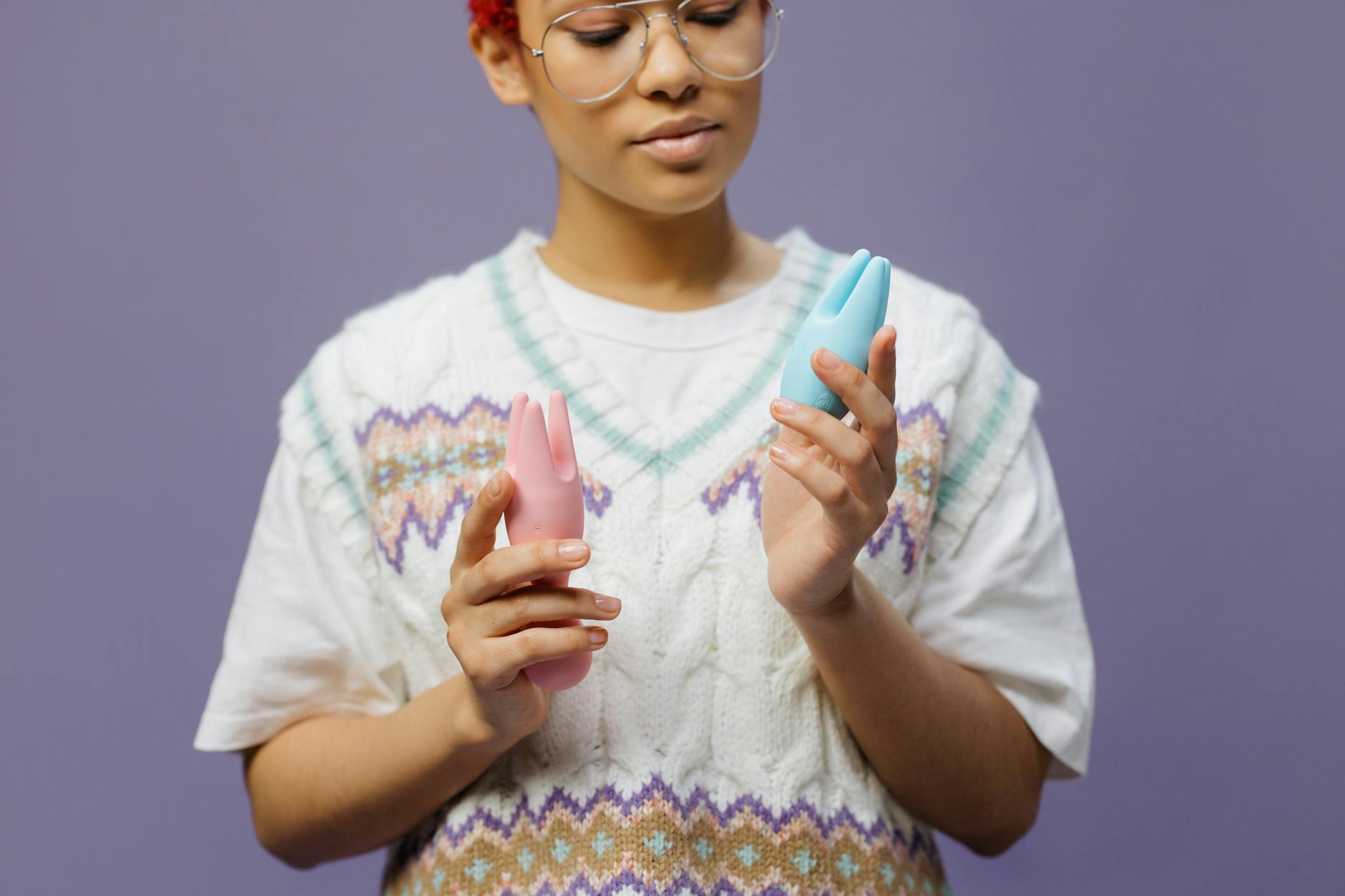
Photo by cottonbro studio on Pexels
When slower arousal is actually a gift
I know that sounds like corporate wellness speak. It's not. Here's why.
Fast arousal after 30 is often reactive. Something triggers it, and you follow the impulse. That works fine when you're young and have high baseline desire. After 40, slower arousal asks you to be intentional. You have to choose pleasure. You have to create conditions for it. That intentionality changes everything about how satisfying it is.
People who've worked through the frustration of slower arousal often report that their orgasms are more intense and more emotionally connected than they were when sex was reflexive. You're not just responding to stimulus. You're building toward something.
A lemon vibrator makes that building process much less frustrating because you're not manually straining toward a finish line. You're exploring a longer warm-up with a tool that's designed to support it.
FAQ: Arousal, aging, and the right tools
Is slower arousal after 40 permanent?
Mostly yes, but it's not a straight line. Stress, medication, relationship dynamics, and health all influence it. If you stop managing one of those factors, you might notice a shift. But the baseline physiological reality—that arousal takes longer—that doesn't usually reverse. Which is fine. It's not worse. It's different.
Can a lemon vibrator make arousal faster at my age?
Not faster than it's biologically set to be. But it can make the warm-up period feel less effortful and less frustrating. You're not fighting against your body anymore. You're working with it. That changes the experience significantly.
Should I use a lemon vibrator every time, or just when arousal is slow?
There's no rule. Some people use one every time and love it. Others use it when they have limited time or when arousal feels especially sluggish. Experiment. Your body will tell you what works. The nice part about lemon clitoral vibrators is they're low-pressure enough for regular use without desensitizing your tissue, especially when you're rotating intensity patterns.
Does using a lemon vibrator mean my partner doesn't turn me on anymore?
No. It means your nervous system operates differently now. That's not about your partner. It's about your body's need for sustained, consistent stimulus as a warm-up tool. Many people find that using a lemon vibrator solo speeds up their capacity to be aroused with a partner later. It's not replacement. It's preparation.
What intensity should I start with on a lemon vibrator if arousal is slow?
Begin on pattern 1 or 2. These are subtle, sustained pulses. Your nervous system recognizes them as safe and doesn't brace against them. After 5 to 10 minutes, you can increase to pattern 3 or 4 if you want more intensity. Slow doesn't mean weak. It means giving your body time to recognize and respond to stimulus before you amp it up.
Is the slower arousal a sign of hormonal issues I should discuss with my doctor?
Maybe. If it's a sudden change—you went from fast arousal to extremely sluggish in weeks—that's worth mentioning to your GP. But if it's a gradual shift over years that started in your late 30s or early 40s, that's normal aging. You can mention it to your doctor, but you don't need permission to adapt your tools and techniques.
The real conversation
Slower arousal after 40 isn't a problem to solve. It's a signal to adapt. Your body is asking for different conditions: more time, more sustained input, more intention. A lemon vibrator isn't a workaround for a broken body. It's an alignment tool. It matches what your body is actually asking for instead of forcing it to perform the way it did 15 years ago.
Your pleasure still matters. Your capacity for intensity hasn't diminished. You're just operating on a different timeline now. And that timeline, once you stop fighting it, often feels more satisfying than the rushed version ever did.
If slower arousal is frustrating you or creating tension in a relationship, that's worth exploring. Reach out and let's talk about what's actually going on. Sometimes it's biology. Sometimes it's stress or a medication side effect. Sometimes it's about connection with your partner. The answer changes the approach. But whatever it is, you deserve a clear path forward, not guesswork.
For more on how your body changes with age and what tools support those changes, explore our guide on the best lemon vibrator intensity levels for sensitive tissue after 40. You might also find it helpful to review how to use a lemon vibrator when arousal feels harder after major life changes, which covers similar territory from a different angle.