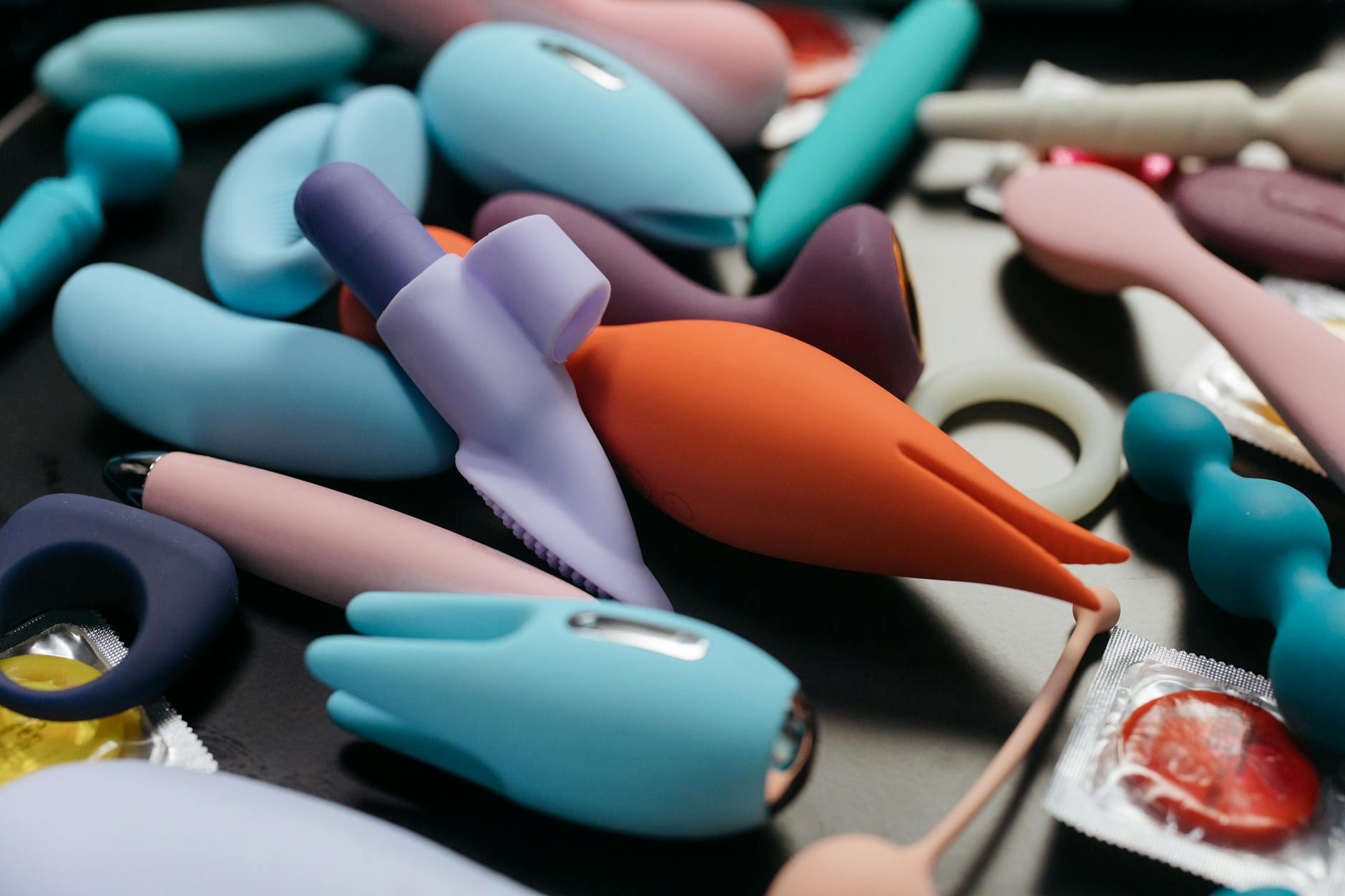
How to Use a Lemon Vibrator When You're in an Open or Non-Monogamous Relationship
Let's be real. Open and non-monogamous relationships change everything about how you think about pleasure, autonomy, and what it means to take care of yourself sexually. The conversation about whether a toy is "cheating" or how to integrate solo pleasure when you have multiple partners gets tangled fast.
Here's what I know from working with couples navigating these dynamics: a lemon vibrator isn't a problem to solve or a symbol to interpret. It's a tool that can actually clarify what you want, what you need, and how to ask for it. That matters more in non-monogamous relationships than anywhere else.
The difference between solo pleasure and partnered connection
This is the conversation most people skip, and then they wonder why they're fighting about toys.
In monogamous relationships, there's often (unfairly) an assumption that partnered sex should be enough. In non-monogamous relationships, that assumption evaporates, but a new one takes its place: that solo toys are just filler between partners, or that needing one means something's broken.
It doesn't. Solo pleasure and partnered pleasure are two completely different things. A lemon clitoral vibrator gives you something that another person's hand, mouth, or body cannot: complete autonomy over rhythm, intensity, and timing. That's not a replacement for a partner. It's a conversation with yourself.
When you're non-monogamous, you're already managing multiple relational and sexual rhythms. Your primary partner might be unavailable. A secondary partner might have lower desire that night. Or you might just want an orgasm on your timeline, not theirs. A tool like a lemon sucker lets you do that without it being a referendum on anyone else's desirability or your relationship health.
Why non-monogamous people often resist toys (and why that matters)
I've worked with plenty of polyamorous and open folks who avoid vibrators entirely, and the reasons usually cluster around guilt or fear.
Guilt: "If I use a toy, I'm admitting one partner isn't enough." (Your partner also isn't enough to do your taxes or fix your car. That's not a relationship failure. That's just life.)
Fear: "My partner will think I prefer a toy to them." (Again. Different things. A lemon vibrator is not competing for your emotional loyalty.)
The third reason, though, is worth sitting with: sometimes non-monogamous people avoid solo pleasure because they're still absorbing monogamous conditioning. You've already broken one big rule by having multiple partners. The guilt runs deep, and sometimes a vibrator feels like asking for too much.
Here's what I tell my clients: in a non-monogamous structure, solo pleasure is actually easier to defend. You're already managing consent, communication, and boundaries across multiple relationships. A toy is just another honest conversation about what you need.
How to talk about it with your partners
Timing is everything. Don't introduce a lemon vibrator or any toy in the middle of conflict or insecurity. That's not fair to anyone.
Instead, pick a moment when the relationship feels stable. You might say something like: "I've been thinking about exploring more of my own pleasure. I'm interested in getting a vibrator. I wanted to let you know before I did because it matters to me that we talk about this."
That sentence does four things at once. It names what you're doing. It signals agency (you've already decided). It sets a boundary (this is happening). And it shows respect (I'm telling you first).
Then listen. Your partner might have questions. They might feel insecure. They might be totally on board. All of that is data. If a partner responds with anger or hard boundaries around your solo pleasure, that's worth examining. Non-monogamy is built on the principle that you have autonomy over your own body. A toy doesn't change that.
If they're curious, that's different. Some partners want to watch. Some want to join. Some want to hear about it later. Those are all valid. You get to decide what feels okay.
When and how to use it solo
The logistics are surprisingly practical.
First: you don't need permission to touch yourself. Ever. Full stop. If you're in a relationship structure where you feel like you do, that's a bigger conversation than this post can hold.
When you're actually using a lemon clitoral vibrator solo, the rituals matter more than you'd think. Some people like to do it when they have the house to themselves. Others build it into their wind-down routine. Some people use it to process stress or emotion. Some use it purely for the sensation. All of it is fine.
A few practical things that help: water-based lubricant will make the experience more comfortable and intense. Start at lower intensity settings and work up. How to Use a Lemon Vibrator for the First Time covers the basics in more detail if you're new to toys.
The frequency question comes up a lot. How often is too often? The answer is: there isn't one. If you want to use a lemon vibrator every day, that's fine. If you use it once a month, that's also fine. Your body will tell you what it needs.
What changes when you bring it into partnered sex
This is where the architecture gets interesting.
Some non-monogamous people use toys during sex with their partners. Some don't. Some use them differently with different partners. None of that is weird.
If you're using a lemon sucker during partnered sex, it's usually because you've already figured out what you need to orgasm. Maybe you need clitoral stimulation while a partner provides penetration. Maybe you need consistent rhythm that another person can't maintain. Maybe you just want the fullness of sensation that comes from multiple types of touch at once.
Bring it up beforehand. "I'm thinking about using my vibrator during sex next time. Does that work for you?" Some partners get excited. Some need a minute to adjust. Both are okay.
In non-monogamous structures, this conversation gets easier across partners. Your primary might love it. Your secondary might feel weird about it. That's not a contradiction. It's just different people wanting different things, which is kind of the whole point of non-monogamy.
The jealousy question (spoiler: it's not about the toy)
Here's what I see over and over: someone brings a vibrator into a non-monogamous relationship and suddenly there's jealousy or insecurity. The toy becomes the symbol for something else entirely.
Maybe it's actually about one partner feeling less priority. Maybe it's anxiety about how much time you're spending on pleasure versus connection. Maybe it's unprocessed monogamous conditioning that says your desire for pleasure outside of a partner means something's wrong.
The toy is not the problem. It's the messenger.
If jealousy shows up, the conversation isn't "Should I stop using this?" It's "What's actually coming up for you?" Sometimes you need to slow down solo pleasure while you work through something. Sometimes you need to keep going and work through it in parallel. Context matters.
But here's the thing: in a non-monogamous relationship, you've already agreed that your partner's pleasure and partnered experiences might include other people. A toy is a much smaller logistical complication than an actual other partner. If a vibrator is the limit, you might want to revisit what non-monogamy actually means to you both.
Building pleasure into your relational structure
The healthiest non-monogamous relationships I've worked with treat pleasure as something everyone deserves, solo and partnered.
That means building actual space for it. Not sneaking off to use a lemon vibrator when no one's looking. Actually scheduling or normalizing solo pleasure time the way you would date nights with individual partners.
When everyone knows that solo pleasure is part of the landscape, it stops being a secret. It becomes neutral. Which is what it should be.
You might also explore how toys work across your whole relational network. Maybe one partner loves using toys with you. Maybe another is fine with it but not interested in participating. Maybe you have partners who are deeply uncomfortable. You don't have to manage everyone's comfort equally. But you do have to know where everyone stands.
In non-monogamous relationships, a lemon vibrator isn't a threat to anyone. It's just you, handling yourself, with honesty and care.
The bigger picture: pleasure as autonomy
At the core of healthy non-monogamy is a simple principle: you own your body and your pleasure. A vibrator is just a tool that lets you exercise that ownership.
When you use a lemon clitoral vibrator, you're not betraying anyone. You're not asking for permission. You're taking care of yourself in the most literal sense.
That's actually the practice that makes non-monogamy work in the first place. The willingness to tend to your own needs. The comfort asking for what you want. The ability to experience pleasure without it being someone else's job to provide it.
A toy doesn't complicate that. It clarifies it.
FAQ: Vibrators and non-monogamous relationships
Is using a vibrator solo considered cheating in an open relationship?
No. Cheating is defined by breaking agreements you've made with your partners. Solo pleasure with a tool is not partnered sexual activity. It's not another person. It's you and a vibrator. Unless you and your partners have explicitly agreed that solo toys are off-limits, this falls squarely in the "your body, your choice" category.
Should I tell my partners before I use a lemon vibrator?
You don't need permission to use a vibrator. But transparency usually helps. If you're new to non-monogamy or your partners have expressed insecurity, a heads-up can prevent misunderstandings. Something simple like "I'm getting a toy for solo pleasure" covers it. You don't need to narrate every time you use it.
What if one partner is uncomfortable with me using a vibrator and the other is fine with it?
Your partners don't have to agree on everything. If one partner has genuine distress about solo toys, that's worth exploring. But ultimately, your autonomy over your own body isn't negotiable, even in non-monogamous relationships. You might find a compromise (using it only when they're not around, for example), but you're not obligated to stop touching yourself because someone's uncomfortable.
Can using a lemon vibrator help with desire mismatch across multiple partners?
Indirectly. If you have one partner who wants sex more often than you can provide it, solo pleasure with a vibrator can help them feel less rejected. But it's not a substitute for actual conversation. If desire is wildly mismatched across your relationships, that's the real thing to address, and a toy is just a band-aid. How to Use a Lemon Vibrator for Partnered Pleasure When Desire Feels Mismatched goes deeper into that specific dynamic.
Should I hide my vibrator from my partners?
No. Hiding it usually signals shame, which then gets picked up by your partners as "this is a secret, therefore it's a threat." Keep it where your partners might see it. Normalize it. Make it a non-issue through visibility rather than secrecy. The more openly you exist in your pleasure, the less room there is for projection or paranoia.
What if I want to use a lemon vibrator with one partner but not another?
That's completely fine. You might have different comfort levels, different preferences, or different intimacy styles with different partners. One partner might love it. Another might not be interested. That's not about the toy. That's just about different people wanting different things. And that's kind of the whole architecture of non-monogamy.
Your pleasure is yours to shape. In a non-monogamous relationship, that's not selfish. It's the whole foundation the structure is built on.